 Blog
BlogKey Takeaways
- The realistic timeline for a custom pool in the Valley
- What happens in each construction phase
- Pool permits, barrier codes and inspections in Phoenix
- How HOA architectural review affects the schedule
- What genuinely causes delays, and what does not
- The best time of year to start a Phoenix pool build
- Questions to ask a builder before signing
The Question Every Homeowner Asks First
Before anyone asks about tile, coping or water features, they ask how long it will take. It is the right question, and the honest answer is that a custom pool in Phoenix typically takes somewhere between eight and sixteen weeks of construction once permits are issued, with design and approvals adding several weeks in front of that.
The range is wide because a pool is not a product pulled off a shelf. It is a permitted structure, engineered for one lot, built by a sequence of trades who each depend on the one before them.
A schedule is not a promise about weather, municipal review or utility locates. It is a promise about sequencing: that the next trade is booked, the inspection is scheduled, and nobody is waiting on a decision that should have been made during design.
Sun America Pools & Spas has built and remodeled pools across Phoenix, Scottsdale, Paradise Valley, Chandler, Gilbert and Mesa since 1985. Our owner-led design-build process front-loads decisions, because the single largest cause of a slipped pool schedule is a choice made after the shell is already in the ground.
Custom Pool Construction Timeline at a Glance
| Phase | Typical Duration | What Happens | Owner Involvement |
|---|---|---|---|
| Design and engineering | 2 to 4 weeks | Site study, layout, elevations, plan set | High |
| Permits and HOA review | 2 to 6 weeks | City submittal, structural review, HOA approval | Low, signatures only |
| Layout and excavation | 2 to 4 days | Stake-out, dig, spoils haul-off | Access decisions |
| Steel and rough plumbing | 3 to 5 days | Rebar cage, plumbing runs, electrical rough | None |
| Gunite or shotcrete | 1 day, plus cure | Shell shot and shaped, then watered while curing | None |
| Tile, coping and masonry | 1 to 2 weeks | Waterline tile, coping, raised walls, features | Sample approvals |
| Decking and hardscape | 1 to 2 weeks | Travertine, pavers or concrete, drainage | Layout walk |
| Equipment set and electrical | 3 to 5 days | Pad build, automation, bonding, final electrical | None |
| Interior finish | 1 to 2 days | Pebble or plaster applied, then immediate fill | Fill day at home |
| Startup and handover | 7 to 28 days | Chemistry balanced, brush-in, systems walkthrough | High |
Read that table as a chain rather than a list. Each phase has an inspection or a cure time that cannot be compressed, and a trade that has to be on site in order.
What Happens in Each Construction Phase?
Design and Engineering
This is where the schedule is actually won. Site measurements, setbacks, easements, utility locations, grade and drainage all get resolved on paper. Shape, depth profile, spa placement, bench and step locations, water features, decking footprint and the equipment pad location are drawn to scale. For a custom pool design, the deliverable is a plan set complete enough that no trade on site has to guess.
Permitting and Approvals
The plan set goes to the municipality for review, and to the HOA where one exists. These two reviews often run in parallel, which is why an experienced builder submits both the same week.
Layout and Excavation
The pool is painted and staked on the actual ground, which is the last and best chance to feel the design at full size. Then the crew digs. On tight Valley lots, access is the whole story: gate width, side-yard clearance and where a dump truck can stage determine whether excavation takes two days or four.
Steel and Rough Plumbing
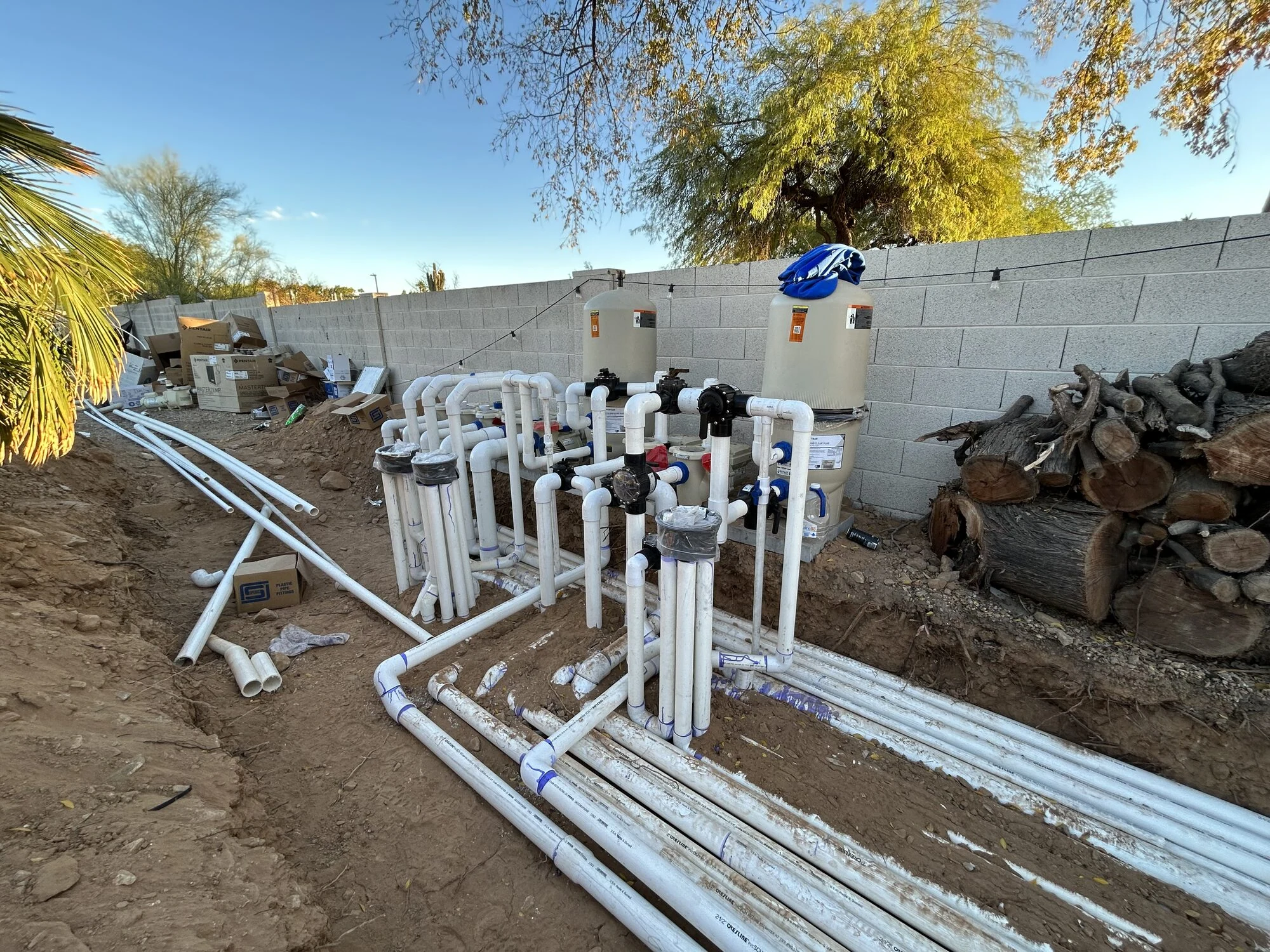
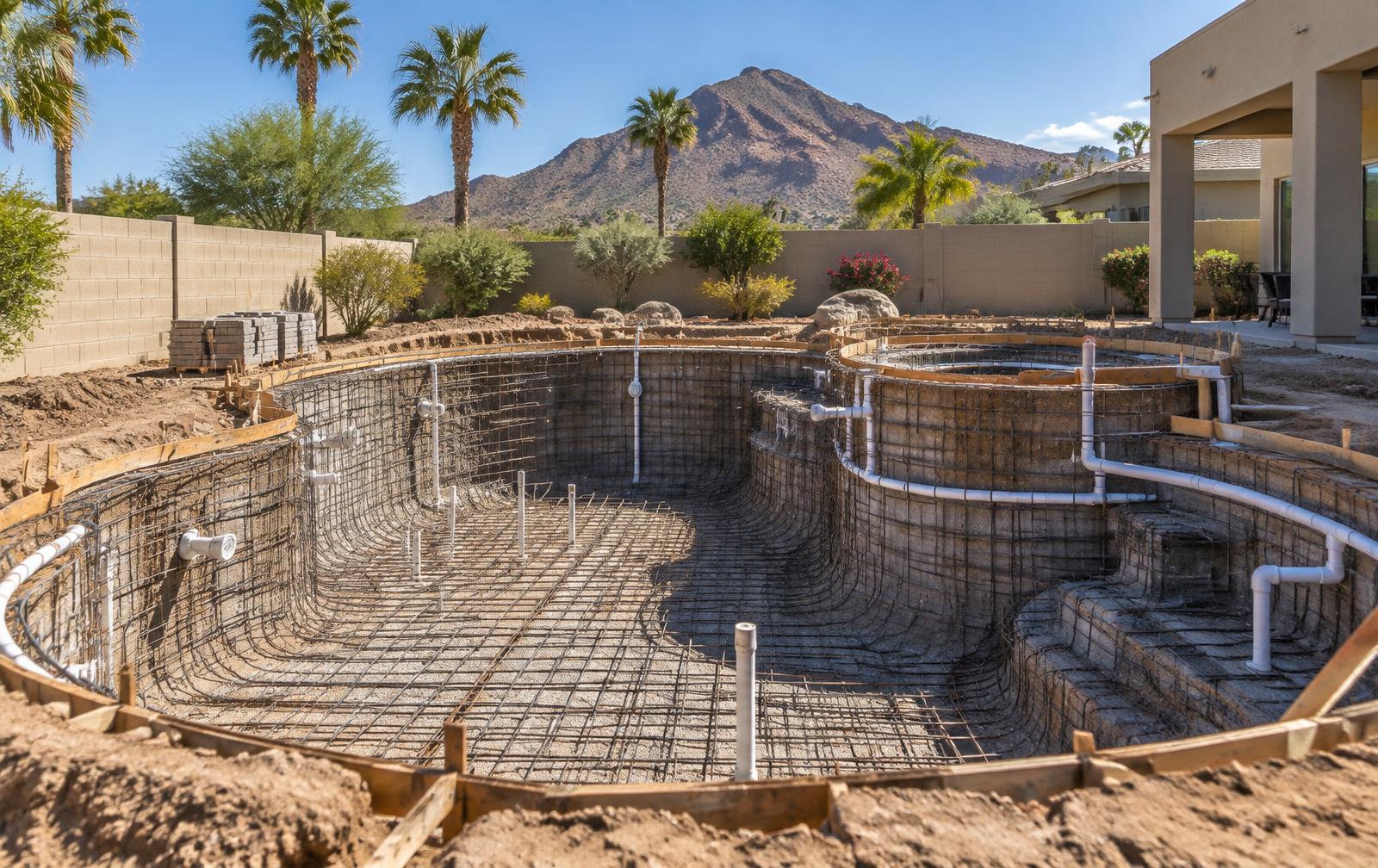
A rebar cage is tied to engineered spacing, then suction, return, spa, water-feature and cleaner lines are run to the pad location, and electrical is roughed for lighting and equipment. Both get inspected before anything is covered.
Gunite or Shotcrete
The shell is shot in a single day and hand-shaped into benches, steps, spa walls and the bond beam. Then it cures, and curing is not idle time. In Phoenix heat the shell needs water, sometimes several times a day, to hydrate properly and reach strength.
Tile, Coping and Masonry
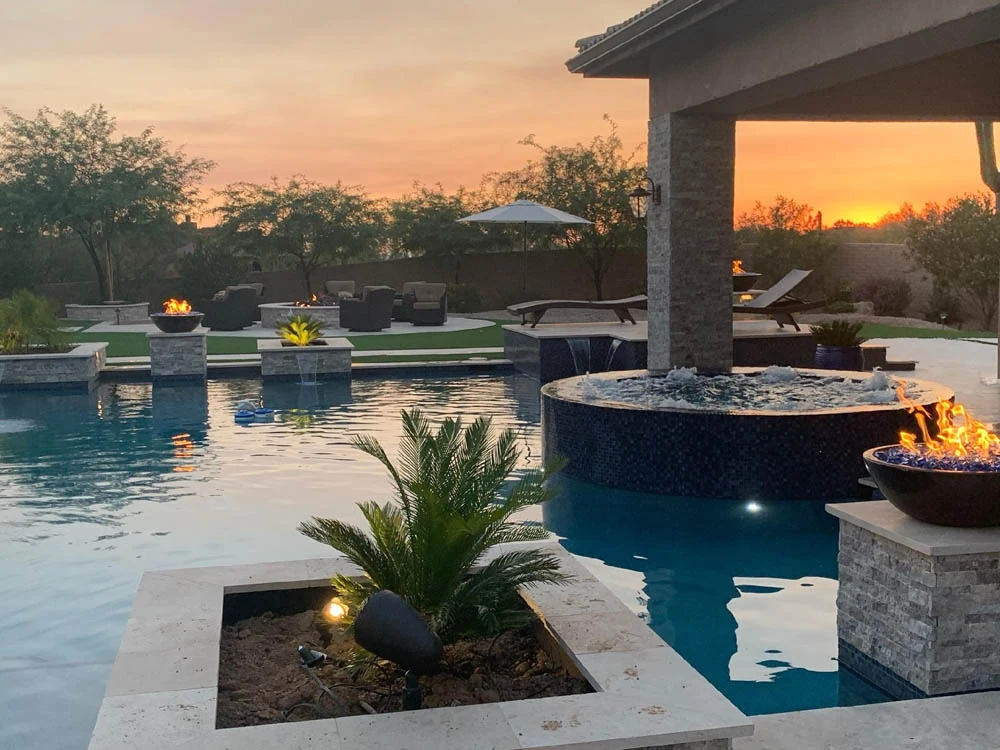
Waterline tile, coping, raised bond beams, spa spillways, planters and any luxury pool material selections get installed here. Craft speed varies with detail: a simple rectangular pool with straight coping moves fast, a curved spa with mitered stone does not.
Decking and Hardscape
Deck prep, drainage, and then travertine, pavers or concrete. This is usually the widest square footage on the project and often the phase homeowners underestimate.
Equipment, Interior Finish and Startup
The pad is built, plumbed, bonded and wired, automation is configured, and the pool is finished with pebble or plaster and filled immediately. Startup follows: balancing chemistry, brushing in the finish, running equipment through its cycles, and a walkthrough of every system on the pad.
What Permits Does a Pool Require in Phoenix?
A residential pool is a permitted structure, and in the Valley that usually means a building permit with structural, electrical and barrier review. Requirements are set by each municipality, so Phoenix, Scottsdale, Paradise Valley, Chandler, Gilbert, Mesa and Maricopa County each have their own submittal standards, fees and inspection cadence.
What review typically looks at:
- Setbacks from property lines, easements and structures
- Structural engineering for the shell, and for raised walls or elevated spas
- Electrical bonding, equipment circuits and lighting
- Pool barrier and safety code compliance, including fencing and gate hardware
- Drainage, grade and how the deck sheds water away from the house
- Encroachment on utility easements, and required utility locates before digging
Two practical notes. First, barrier compliance is not optional and is inspected: fencing, self-closing and self-latching gates, and door or window protection where the house forms part of the enclosure. Second, permitting is the phase homeowners can most easily slow down, simply by making a design change after submittal. A revision is a resubmittal.
Sun America Pools & Spas is a licensed and bonded Arizona pool contractor, ROC# B-5 352928, and we handle municipal submittals as part of the build.
How Does HOA Approval Affect a Pool Build?
In much of Scottsdale, Paradise Valley, Chandler and Gilbert, the HOA architectural committee is a second approval track with its own calendar. Many committees meet monthly, which means missing a submittal window by three days can cost four weeks.
Typical HOA submittals ask for:
- A site plan showing the pool, decking and equipment location
- Elevations for raised walls, water features and shade structures
- Material and color selections for decking, coping and masonry
- Equipment screening and noise considerations
- Construction access, staging and hours
- Landscape and drainage impact
Submitting to the HOA the same week as the city, with complete materials rather than partial ones, is the single most effective schedule protection available in a covenanted community. If you are building in a master-planned neighborhood, see our Scottsdale pool builder page for how we handle local review.
What Actually Causes Pool Construction Delays?
Some delays are weather. Most are decisions.
| Cause | Real Impact | How It Gets Avoided |
|---|---|---|
| Mid-build change orders | Days to weeks, plus resubmittal | Finalize selections during design |
| Late material selections | Stalls tile, coping and decking | Approve samples before excavation |
| Special-order materials | Lead times outside the builder's control | Specify early, confirm availability |
| Monsoon storms | Lost days, muddy excavation, deck delays | Schedule dirt work outside peak monsoon |
| Utility locates and surprises | Excavation pauses | Locate before staking, verify easements |
| Inspection scheduling | Waiting between phases | Book inspections ahead of trade completion |
| Tight lot access | Slower dig, hand work, extra hauling | Assess access during the site study |
| Unpermitted existing work | Must be resolved before approval | Site study catches it early |
The pattern is consistent. Delay is rarely one dramatic event. It is a decision that arrives two weeks after the trade needed it.
When Is the Best Time of Year to Build a Pool in Phoenix?
Arizona has a real building season advantage, and it runs opposite to the swim season.
| Start Window | Advantages | Trade-offs |
|---|---|---|
| Fall, October to December | Ideal working weather, ready for spring | Highest demand, book early |
| Winter, January to March | Efficient dirt work, cool crews, spring completion | Holiday review calendars |
| Spring, April to May | Fast progress, summer completion | Peak scheduling pressure |
| Summer, June to September | Availability, off-peak booking | Heat and monsoon storm days |
The practical takeaway: if the goal is swimming next spring, start design in early fall. Homeowners who begin design in April and hope to swim by Memorial Day are usually one season off, because permits and HOA review consume the front of the calendar.
What Should You Expect From Your Builder During the Build?
A luxury build is a relationship, not a delivery. Reasonable expectations throughout:
- A named point of contact who knows the project by memory
- A phase schedule updated when reality changes, not after the fact
- Notice before excavation, gunite and fill days, which are the loud, high-traffic ones
- Site cleanliness and controlled staging of material
- Written change orders with cost and schedule impact stated together
- Inspections handled by the builder, not the homeowner
- A startup walkthrough covering equipment, automation and finish care
- A clear warranty conversation at handover
Our about page explains how we run projects as an owner-involved, family-run team. If you are renovating rather than building new, a pool remodel follows a compressed version of the same sequence, without excavation on most projects.
Nine Questions to Ask Before You Sign a Pool Contract
- Who submits the permit, and to which jurisdiction?
- Is HOA approval included, and when will it be submitted?
- What is the phase-by-phase schedule, in writing?
- Which selections must be finalized before excavation?
- Are any specified materials on extended lead times?
- Who is my point of contact during construction?
- How are change orders priced and documented?
- What is included in startup, and how long does it last?
- What is warrantied, by whom, and for how long?
A builder who answers all nine without hesitation is telling you how the next four months will go.
Frequently Asked Questions
How long does it take to build a pool in Arizona from start to finish?
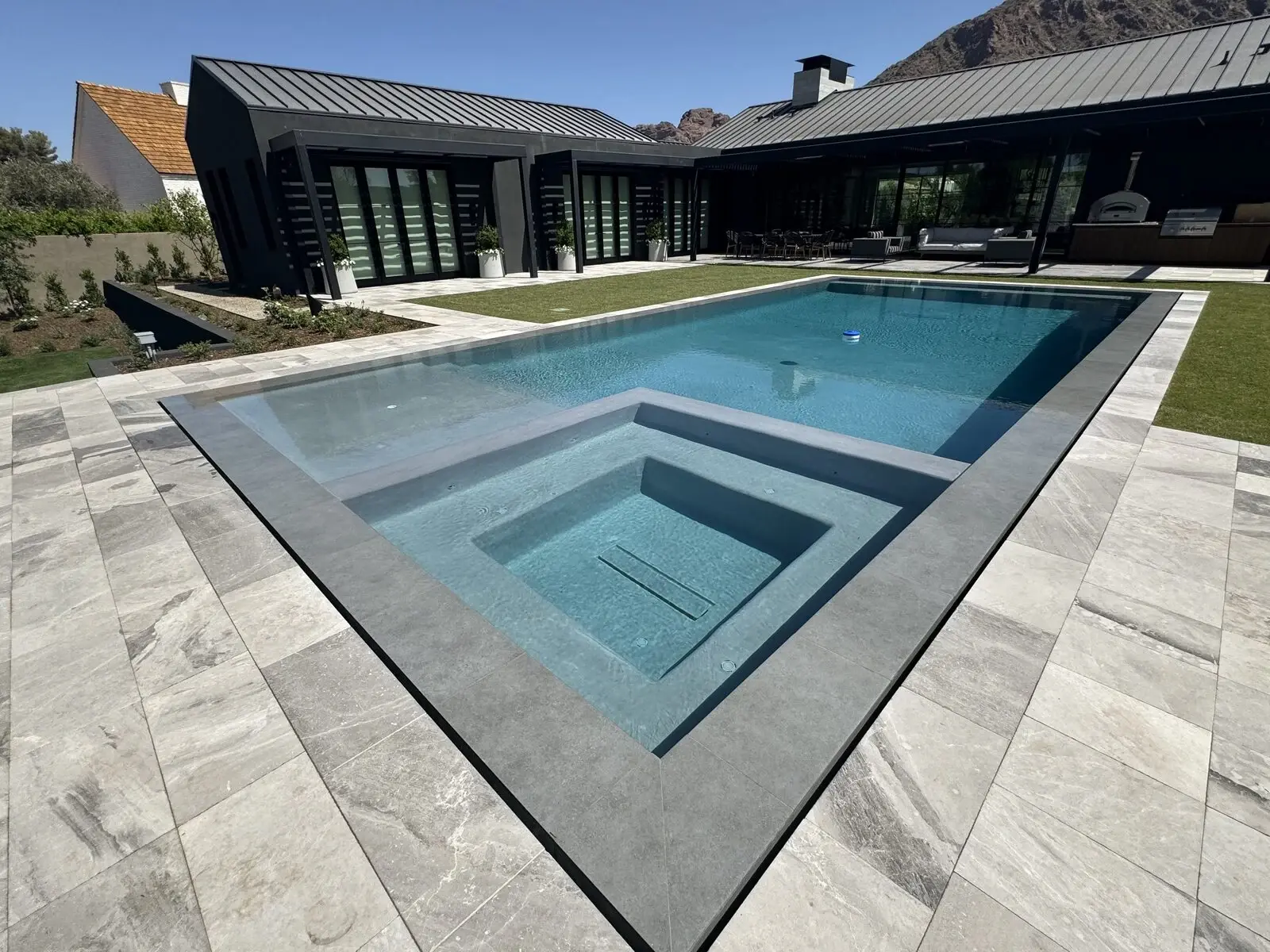
Counting design and approvals, most custom projects run roughly three to five months from first meeting to first swim. Construction itself is typically eight to sixteen weeks after permits are issued. Complex projects with elevated spas, extensive hardscape, infinity edges or structural retaining work sit at the longer end.
How long does gunite take to cure before tile?
The shell is shot in one day and then cured, and in Phoenix heat that means keeping it wet. Tile and coping follow once the shell has reached workable strength. Full concrete strength continues developing long after the pool is in use, which is normal and expected.
Can a pool be built in the summer in Phoenix?
Yes, and summer often has better crew availability. The trade-offs are heat and monsoon season: storms cost working days, excavation in wet soil is slower, and deck work is weather dependent. A summer start commonly means a fall or early winter finish.
How long does pool permitting take in Phoenix?
It varies by municipality and by how complete the submittal is. Two to six weeks is a reasonable planning range for a complete plan set. Incomplete submittals and mid-review design changes are what turn a short review into a long one.
Do I need a fence around my pool in Arizona?
Pool barrier requirements are code-enforced and inspected, and they cover fencing height, self-closing and self-latching gates, and protection for doors and windows where the house forms part of the enclosure. Specifics are set by your jurisdiction, and we design the barrier into the plan rather than adding it afterward.
Can I swim as soon as the pool is filled?
Not immediately. After the interior finish is applied and the pool is filled, startup runs for one to four weeks depending on the finish: balancing chemistry, brushing in the surface and cycling equipment. Following the startup instructions protects the finish for its entire life.
Does the schedule change if I add a spa or water feature later?
Adding during design costs almost nothing in time. Adding after steel and plumbing are set means new plumbing runs, possible structural revision and, in some cases, a permit revision. This is exactly why selections are finalized before the dig.
Start the Calendar Before You Start the Dig
Building a custom pool in Phoenix is not a mysterious process. It is a sequence: design thoroughly, permit completely, dig once, and let each trade finish before the next arrives. Homeowners who decide early and change little swim on schedule. The ones who leave selections open discover that the pool waited on them.
Sun America Pools & Spas is a family-run Arizona pool builder serving Phoenix, Scottsdale, Paradise Valley and the Greater Phoenix Valley. Since 1985, our team has designed, built and remodeled custom pools, spas and complete outdoor living environments as a licensed and bonded Arizona pool contractor, ROC# B-5 352928.
Ready to see what your timeline looks like? Request a design consultation and we will walk your lot, review access, setbacks and HOA requirements, and give you a realistic schedule before a single stake goes in the ground.