 Blog
BlogKey Takeaways
- The four material categories in every luxury pool
- Travertine vs. exterior porcelain pool decks
- Whether glass tile is worth the investment
- How interior finishes shape perceived water color
- Pebble vs. plaster finishes in Arizona conditions
- Hard water, sun exposure and long-term appearance
Why Material Selection Matters in Arizona
Choosing luxury pool materials in Phoenix is about more than appearance. Arizona pools live in a demanding environment. Decking sits under intense desert sun, water evaporates quickly, and mineral-rich water can leave deposits around waterlines and spillways. At the same time, a custom pool in Scottsdale or Paradise Valley should feel like an architectural extension of the home.
That means materials should be selected for three things at once: appearance, performance, and architecture.
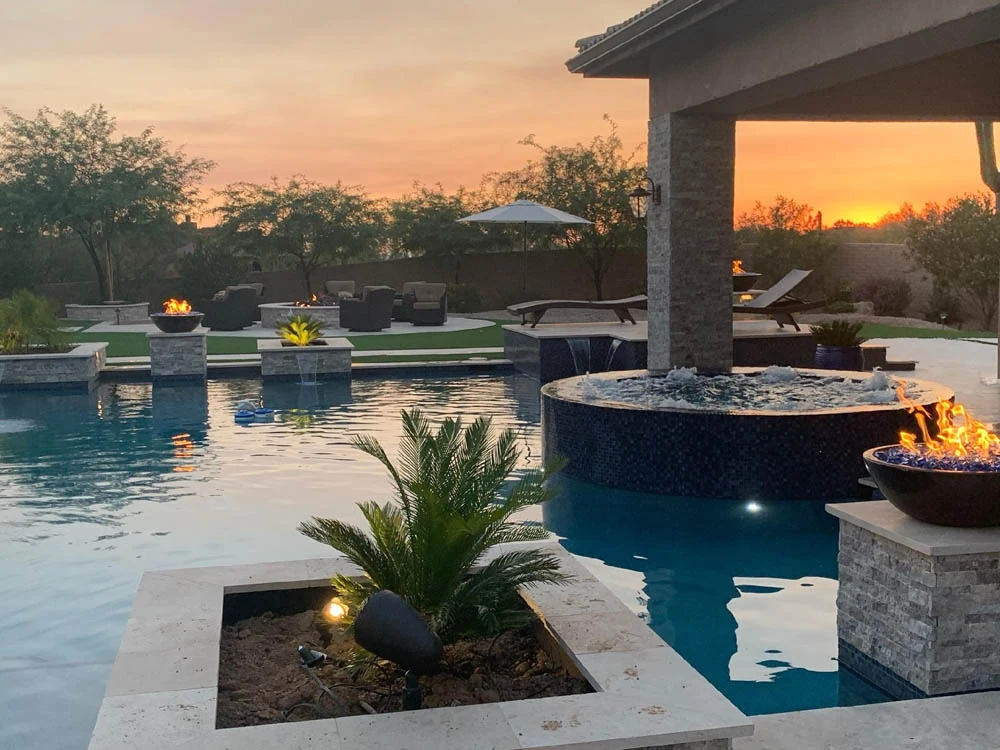
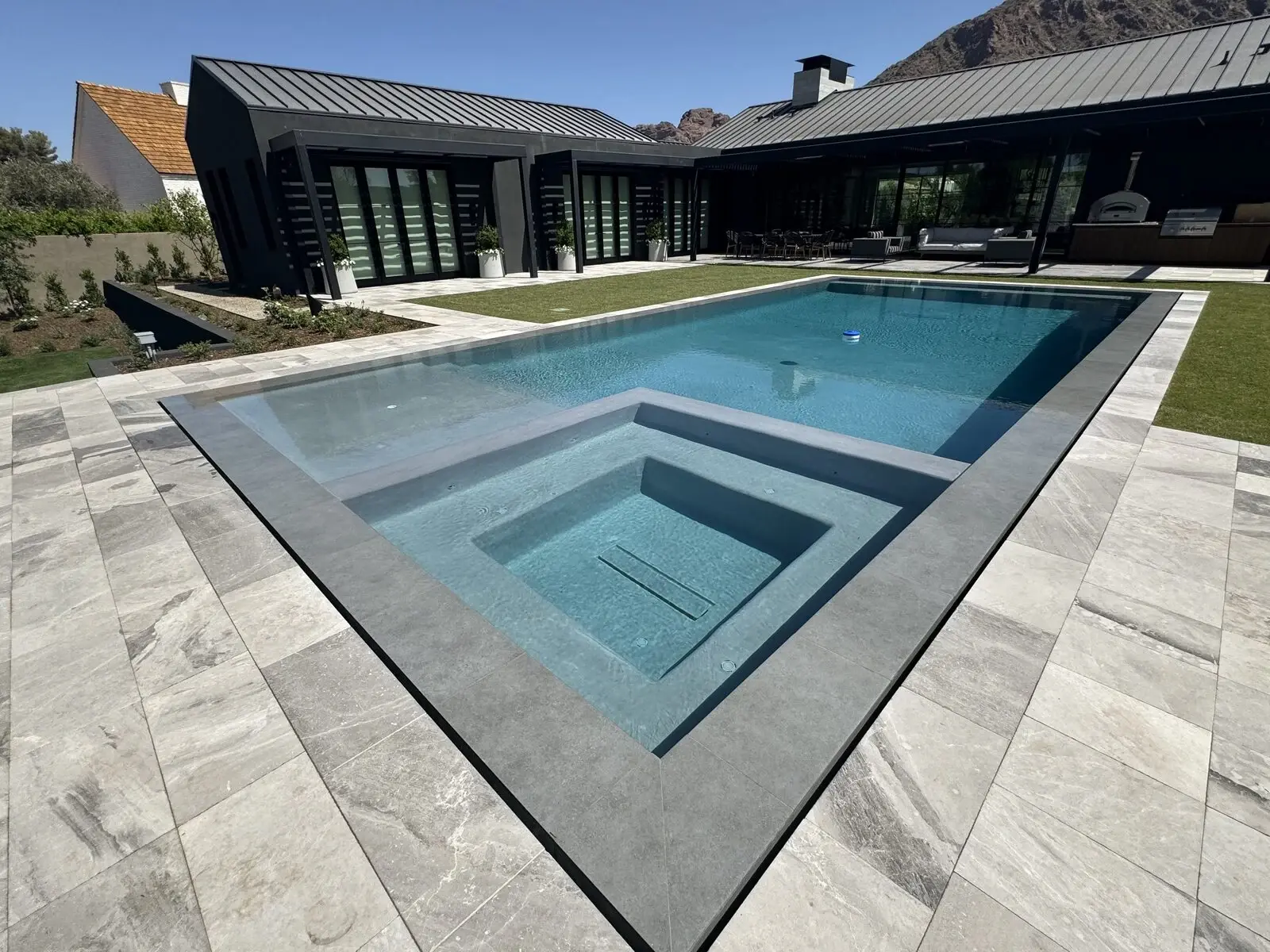
Travertine can create a warm resort-style setting. Exterior porcelain produces a cleaner contemporary look. Glass tile adds reflection and depth. Pebble and aggregate finishes influence both underwater texture and the apparent color of the pool.
The best result is usually a coordinated palette in which the deck, coping, waterline tile, interior finish, water features, landscape, and home all work together.
Sun America Pools & Spas has designed, built, and remodeled custom pools throughout Phoenix, Scottsdale, Paradise Valley, and the Greater Phoenix Valley for four decades. Our owner-led design-build process incorporates material selection into the complete pool design rather than treating finishes as an afterthought.
What Are the Best Luxury Pool Materials for Arizona?
The best material depends on where it will be used. A pool deck has very different requirements from a waterline. Coping performs a different job than an interior finish. A material appropriate for a feature wall may not be suitable for a barefoot surface.
For most high-end Arizona pools, material selection falls into four main categories:
- Decking: travertine, exterior porcelain, concrete pavers, and other outdoor-rated surfaces
- Coping: natural stone, porcelain, or manufactured coping materials
- Waterline and accent tile: glass, porcelain, ceramic, or specialty tile
- Pool interior: pebble, aggregate, plaster-based finishes, or tile
Luxury Pool Material Comparison
| Material | Best Use | Design Style | Maintenance | Arizona Consideration |
|---|---|---|---|---|
| Travertine | Decking and coping | Natural, resort-style | Moderate | Light-colored options are popular around exposed decks |
| Exterior Porcelain | Decking and coping | Modern, architectural | Lower | Must be rated for exterior wet areas |
| Glass Tile | Waterline, spas, feature walls | Reflective, high-end | Moderate | Strong interaction with sunlight and water |
| Pebble Finish | Pool interior | Natural, textured | Moderate | Many colors and aggregate combinations |
| Natural Stone | Coping, walls, water features | Organic, estate-style | Varies | Stone type and finish should match the application |
| Concrete Pavers | Decking and patios | Versatile | Moderate | Broad range of colors and patterns |
The right answer often involves more than one material. A Paradise Valley estate might combine travertine decking, natural-stone coping, glass waterline tile, and a premium pebble finish. A contemporary Scottsdale residence may call for large-format porcelain, minimalist tile, and a darker interior finish. The architecture should drive the palette.
Travertine vs. Porcelain: Which Is Better Around an Arizona Pool?
Travertine and exterior porcelain can both be strong choices, but they create different aesthetics and maintenance expectations.
Travertine
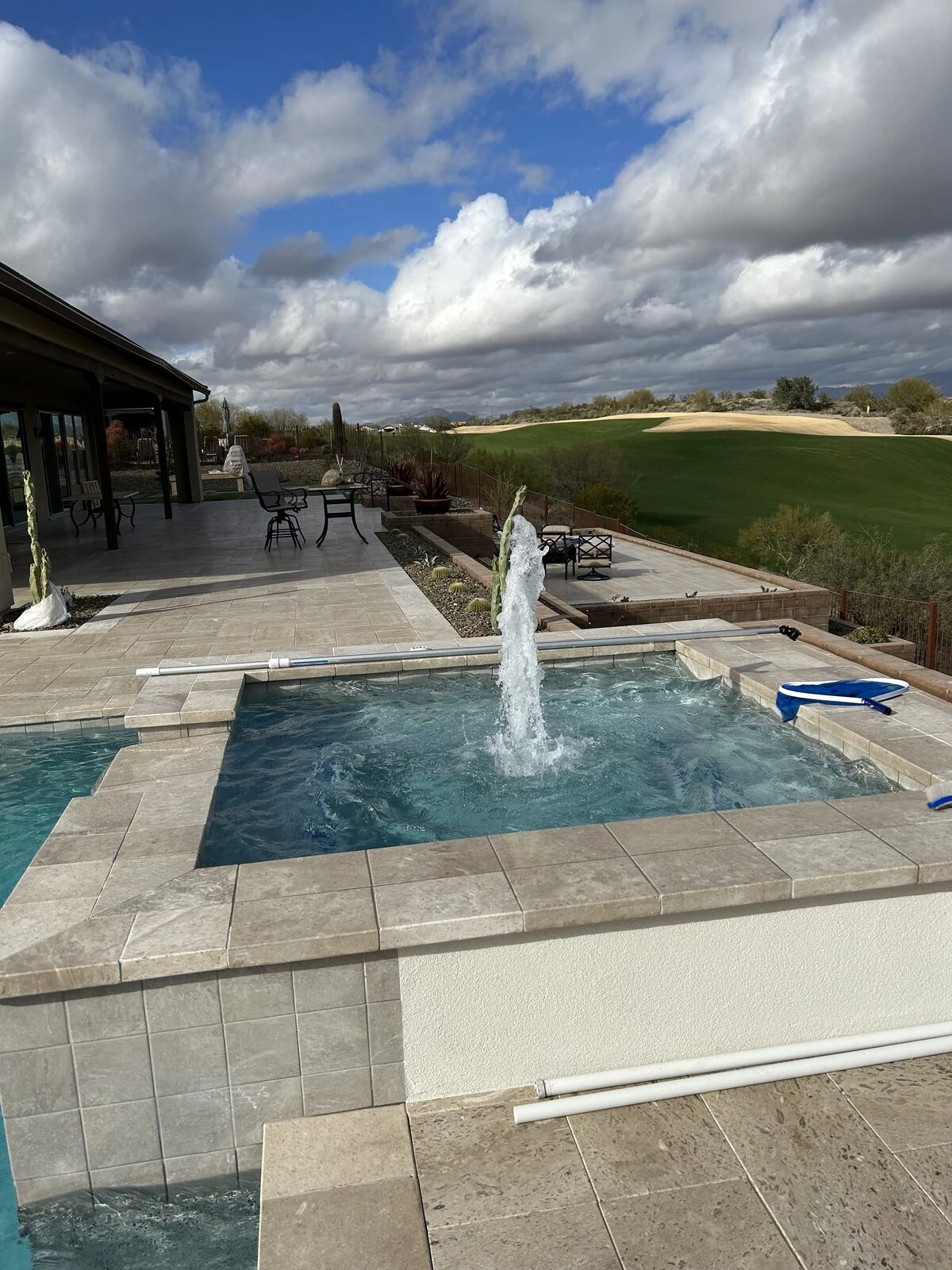
Travertine is a natural limestone known for its soft colors and natural variation. Its variation is part of the appeal, since no two pieces look exactly alike. It works especially well with:
- Mediterranean architecture
- Desert-modern homes
- Resort-inspired landscapes
- Properties using natural stone elsewhere
- Warm, organic design palettes
Travertine does require realistic maintenance expectations. Natural stone may need periodic sealing and appropriate cleaning, and mineral deposits or staining can affect some finishes over time.
Exterior Porcelain
Porcelain offers greater consistency. Modern exterior porcelain can reproduce the appearance of stone or concrete while providing cleaner dimensions, larger formats, and a more contemporary look. Porcelain can be a good fit for:
- Modern Scottsdale homes
- Minimalist architecture
- Large-format deck designs
- Homeowners prioritizing lower maintenance
- Projects requiring consistent color and geometry
Not every porcelain product belongs around a pool. It should be rated for exterior wet conditions and installed using an appropriate system.
Travertine vs. Porcelain Pool Decks
| Factor | Travertine | Exterior Porcelain |
|---|---|---|
| Appearance | Natural variation | More consistent |
| Best fit | Resort, Mediterranean, organic | Contemporary, modern |
| Maintenance | Natural-stone care required | Generally lower |
| Sealing | Commonly required | Typically less stone-style upkeep |
| Design strength | Warmth and natural character | Precision and architectural continuity |
| Replacement | Exact matching can be difficult | Discontinued patterns can be hard to match |
There is no automatic winner. If the home has warm stucco, natural stone, timber, and organic landscaping, travertine may reinforce the architecture. If the residence uses expansive glass, clean lines, and contemporary geometry, porcelain may provide a stronger visual connection.
Does Travertine Stay Cool in Arizona?
Light-colored travertine is commonly selected around Phoenix pools because many homeowners find it comparatively comfortable underfoot. But no pool-deck material should be described as always cool. Surface temperature depends on:
- Color
- Finish and texture
- Direct sunlight
- Time of day
- Ambient temperature
- Shade and material composition
For that reason, physical samples should be viewed outdoors before final selection. A sample that looks ideal under showroom lighting may perform and appear very differently beside a west-facing Scottsdale pool in July.
Is Glass Tile Worth It for a Luxury Pool?
For the right project, yes. Glass tile is one of the most visually striking materials available in custom pool design because it interacts with water and light in a way opaque surfaces cannot. Depending on the tile, viewing angle, water depth, and sunlight, the same installation can look different throughout the day.
Glass tile is commonly used for waterlines, raised spas, infinity edges, water walls, accent bands, feature panels, and full-tile interiors.
The most sophisticated design does not necessarily use the most glass. A concentrated application at the waterline or raised spa often creates more impact than covering every available surface.
Where Premium Materials Create the Most Impact
| Pool Area | Material Opportunity | Why It Matters |
|---|---|---|
| Waterline | Glass or premium porcelain tile | Frames the pool visually |
| Raised spa | Glass tile, stone, or porcelain | Creates a focal point |
| Infinity edge | Coordinated tile | Strengthens the disappearing-water effect |
| Interior finish | Pebble, plaster, specialty aggregate | Influences perceived water color |
| Coping | Stone or porcelain | Defines the water-to-deck transition |
| Pool deck | Travertine, porcelain, or pavers | Connects the pool to the home |
| Water feature | Stone or tile | Adds texture, movement, and contrast |
This is also useful when setting a materials budget. Premium materials do not always need to cover the largest area, and strategic placement can create greater impact.
How Does Pool Tile Affect Water Color?
Homeowners often assume the color of a pool is determined by one tile or finish sample. It is more complex than that. Perceived water color is influenced by:
- Interior finish and pool depth
- Sun angle and sky reflection
- Shade through the day
- Surrounding architecture
- Landscaping and water movement
- Tile and artificial lighting
A gray or blue finish that looks one way on a dry sample can produce a very different effect once installed across the entire pool. For an estate pool visible from interior living spaces, this matters even more. Homeowners may spend more time viewing the pool from a kitchen, living room, or patio than from inside the water.
Pebble vs. Plaster: Which Pool Finish Is Better in Arizona?
Traditional plaster and premium aggregate finishes can both work well. They simply offer different appearances, textures, maintenance expectations, and budgets.
Traditional Plaster
Plaster provides a classic, relatively smooth interior finish. It can be appropriate when the design calls for a simple, understated appearance.
Pebble and Aggregate Finishes
Pebble finishes incorporate exposed aggregate into the pool surface and are available in many colors and textures. They are frequently selected for luxury pools because they can provide:
- More visual texture
- Complex water colors
- Natural-looking interiors
- A wide range of aggregate combinations
- Strong compatibility with resort-style designs
The decision should consider desired texture, water color, maintenance, water chemistry, budget, and surrounding materials. For a luxury pool, one of the most useful questions is what the water should look like from the rooms overlooking the pool. That perspective is often more valuable than selecting a finish from a small sample board.
Why Does Phoenix Hard Water Matter?
Arizona material selection is not only about heat. Phoenix water contains naturally occurring minerals, including calcium and magnesium. As pool water evaporates, those minerals can become visible around surfaces that experience frequent wetting and drying.
Areas that deserve particular attention include waterline tile, spa spillways, infinity edges, water walls, raised bond beams, and fountain features. Dark or highly uniform materials may show deposits differently from lighter or naturally varied surfaces.
This does not mean avoiding premium materials. It means understanding how they will age and what maintenance they may require. A luxury pool should be designed for how it will look years after construction, not only the week it is completed.
Should Pool Materials Match the House?
They do not need to match exactly, but they should relate to the architecture. That is one of the biggest differences between custom pool design and simply choosing finishes from a catalog.
Contemporary Scottsdale Homes
A contemporary home may call for large-format porcelain, rectilinear coping, minimal visual joints, subtle tile, clean wall finishes, and restrained water colors.
Paradise Valley Estates
A property built around warmer natural materials may benefit from travertine, limestone, natural-stone walls, glass or handcrafted tile accents, warm aggregate finishes, and organic transitions into the landscape. See our work across Paradise Valley.
Desert-Modern Homes
Desert-modern architecture often combines both approaches. Natural stone can provide warmth while precise geometry and contemporary tile keep the design modern. The pool should look like it belonged to the property from the beginning.
How Sun America Selects Materials for an Arizona Custom Pool
Our material-selection process starts with the property, not a tile catalog.
1. Architecture
We review exterior colors, stone, stucco, rooflines, windows, doors, geometry, and the overall style of the residence.
2. Sightlines
We consider where the pool will be viewed from inside and outside the home, including living rooms, kitchens, patios, entrances, and outdoor entertaining areas.
3. Sun Exposure
A covered north-facing area experiences different conditions from a deck exposed to intense afternoon sun.
4. Water Exposure
Decking, coping, spillways, infinity edges, and submerged interiors all experience moisture differently.
5. Maintenance Expectations
Some homeowners prefer the character of natural materials and accept additional maintenance. Others prioritize greater consistency and lower surface care.
6. The Complete Palette
Before materials are finalized, we consider deck, coping, waterline tile, interior finish, architecture, and landscape together. A beautiful individual material can still be the wrong choice if it competes with the property around it.
Can You Upgrade Pool Materials During a Remodel?
Yes. Updating materials is one of the most effective ways to transform an older Arizona pool. A luxury renovation may include new waterline tile, interior resurfacing, updated coping, new decking, spa finishes, water-feature finishes, raised walls, lighting, and adjacent hardscape.
The strongest remodels go beyond swapping one old material for another. Instead, the entire palette is reconsidered so the updated pool feels intentionally redesigned. Homeowners planning a larger transformation can also read our guide to luxury pool renovation for an aging Arizona estate pool and explore our pool remodeling and renovation services.
What Should You Ask Before Choosing Pool Materials?
Before approving a material package, ask:
- Is this material suitable for its intended location?
- How will it perform in direct Arizona sun?
- What maintenance does it require, and does it need sealing?
- Is it appropriate for a wet barefoot area?
- How might hard water affect its appearance?
- Can replacement pieces be sourced later?
- How does it relate to the architecture of the house?
- What will the entire palette look like together?
- Can we view the sample outdoors before approval?
Those questions are much more useful than asking which option is simply the most expensive or most popular.
Frequently Asked Questions
What is the best pool deck material for Arizona heat?
There is no single best material for every property. Light-colored travertine is popular for its natural appearance and barefoot comfort, while exterior-rated porcelain can provide a more contemporary aesthetic and generally lower natural-stone maintenance. Color, sun exposure, texture, architecture, and maintenance expectations should all influence the decision.
Is travertine or porcelain better around a Scottsdale pool?
Travertine often works well with resort-style, Mediterranean, natural, and desert-inspired architecture. Porcelain is especially effective around modern homes because of its consistent geometry and contemporary appearance. The better option depends on the property.
Is glass tile worth the cost?
Glass tile can create exceptional reflection, color depth, and visual detail. It works particularly well at waterlines, raised spas, infinity edges, and feature walls, and it does not need to cover the entire pool to create significant impact.
What pool finish creates the bluest water?
No single finish automatically creates one water color. Interior finish, depth, sunlight, sky reflection, landscaping, surrounding materials, and shade all influence how the finished water appears.
Can pool coping and decking be different materials?
Yes. A project may combine natural-stone coping with porcelain decking or use contrasting materials intentionally. The important consideration is whether they feel like part of the same architectural composition.
Design the Materials Around the Home
The best luxury pool materials in Phoenix are not necessarily the newest or most expensive. They are the materials that make sense for the architecture, site conditions, Arizona climate, and the way the homeowner wants the finished backyard to feel.
Travertine can add natural warmth. Porcelain can extend contemporary architecture into the pool environment. Glass tile can turn water and sunlight into a focal point. A carefully selected interior finish can change the character of the entire pool. The skill is in combining them.
Sun America Pools & Spas is a family-run Arizona pool builder serving Phoenix, Scottsdale, Paradise Valley, and the Greater Phoenix Valley. Since 1985, our team has designed, built, and remodeled custom pools, spas, and complete outdoor living environments as a licensed and bonded Arizona pool contractor, ROC# B-5 352928.
Planning a new luxury pool or redesigning an existing estate pool? Request a design consultation and we will evaluate the property, architecture, sun exposure, and design goals to help develop a material palette that looks intentional from the pool edge back to the home.