 Blog
BlogKey Takeaways
- What a luxury pool equipment pad actually includes
- Why variable-speed pumps matter in Arizona
- Cartridge vs. sand vs. DE filtration for hard water
- Heaters and heat pumps for year-round spa use
- Salt, chlorine and mineral sanitation compared
- Smart pool automation, lighting and phone control
- Signs an existing equipment pad is due for an upgrade
The Part of the Pool Nobody Photographs
Every homeowner remembers choosing the waterline tile. Almost none remember choosing the pump. Yet five years after completion, the pool equipment in Phoenix backyards is what determines whether the water is clear in July, whether the spa is warm on a Thursday evening in January, and whether the electric bill feels reasonable.
An equipment pad is not a shopping list. It is a hydraulic system sized to one specific pool, on one specific lot, for one specific family.
A beautifully finished pool on an undersized, mismatched equipment pad is an expensive pool that behaves like a cheap one. The reverse is also true: correct engineering makes an ordinary pool feel effortless.
Arizona makes this harder than most markets. Water evaporates fast, summer water temperatures climb into the nineties, mineral-rich municipal water leaves scale on tile and heaters, and dust storms load filters overnight. Equipment specified for a temperate climate is not specified for the Valley.
Sun America Pools & Spas has engineered equipment systems for custom pools and pool remodels across Phoenix, Scottsdale and Paradise Valley since 1985. Our owner-led design-build process sizes the pad during design, not after excavation.
What Is Included in a Luxury Pool Equipment Pad?
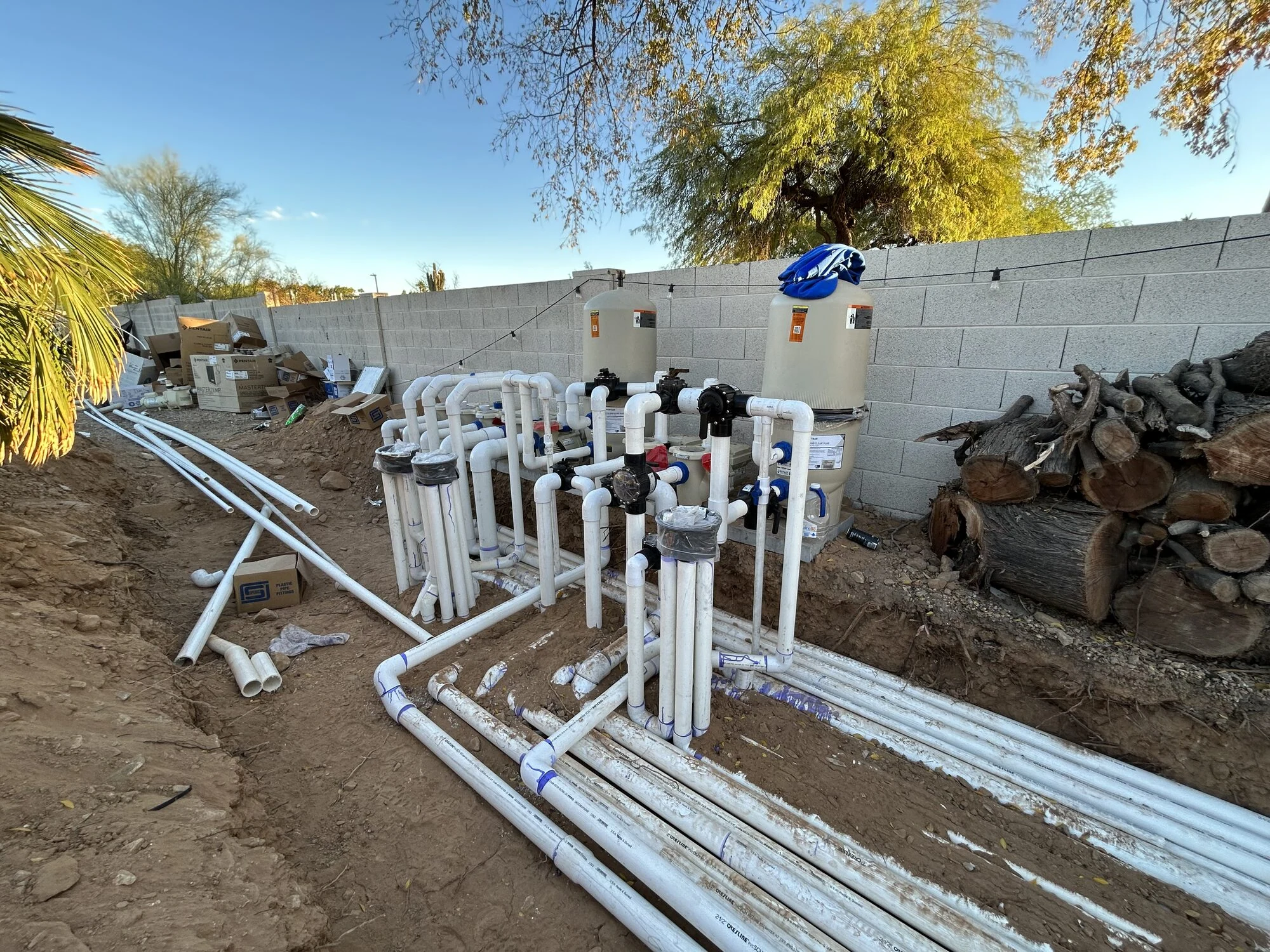
A complete pad is a coordinated set of components. Weakness in any one of them shows up in the water.
- Circulation: variable-speed pump or pumps, sized to the pool's real hydraulics
- Filtration: cartridge, sand or diatomaceous earth, sized above the minimum
- Sanitation: salt chlorine generator, mineral system, tablet feeder or liquid chlorination
- Heating: gas heater, electric heat pump, or both for pool and spa
- Plumbing: correctly sized suction and return lines, valves and unions
- Automation: controller, actuators, sensors, lighting and app control
- Extras: booster pumps for pressure cleaners, water-feature pumps, in-floor cleaning, UV or ozone
Pool Equipment Comparison at a Glance
| Component | Typical Luxury Specification | Arizona Consideration | Service Interval |
|---|---|---|---|
| Pump | Variable-speed, correctly sized | Long run hours at low RPM beat short high-RPM cycles | 8 to 12 years |
| Filter | Oversized cartridge | Dust and monsoon debris load filters quickly | Clean 2 to 4 times per year |
| Sanitation | Salt chlorine generator | Hard water raises scaling risk on cells | Cell inspection annually |
| Heater | Gas for spas, heat pump for pools | Gas heats fast, heat pumps cost less to run | 8 to 12 years |
| Automation | Pentair or Jandy platform | Remote control matters on second homes | Firmware updates |
| Lighting | Color LED, zoned | Sealed fixtures rated for the application | 10+ years |
Notice the pattern. Almost every luxury specification is about capacity and control rather than brand names.
Are Variable-Speed Pool Pumps Worth It in Arizona?
Yes, and this is the least debatable item on the pad. A single-speed pump runs at one high speed whenever it runs. A variable-speed pump chooses its speed for the job.
Because pump energy use rises steeply with speed, running longer at a lower speed generally moves the same volume of water for far less electricity than running briefly at full speed. In a climate where pools need substantial turnover through the summer, that difference compounds every month.
Variable-speed also buys quality of life:
- Quieter operation, which matters when the pad sits near a patio or primary bedroom
- Gentler, more consistent filtration and better water clarity
- Dedicated speeds for spa jets, water features, cleaners and heating
- Lower stress on plumbing, filters and heaters over time
Single-Speed vs. Variable-Speed
| Factor | Single-Speed | Variable-Speed |
|---|---|---|
| Energy use | Highest | Substantially lower |
| Noise | Loud at all times | Very quiet at low RPM |
| Filtration quality | Short, aggressive cycles | Long, steady turnover |
| Feature control | One speed for everything | Speed per task |
| Automation | Limited | Fully integrated |
| Upfront cost | Lower | Higher, recovered through operation |
On a luxury pool remodel, replacing a single-speed pump with a properly sized variable-speed unit and correcting undersized plumbing is often the single highest-value change we make on the entire pad.
Which Pool Filter Is Best for Phoenix Hard Water and Dust?
Filtration is where Arizona conditions punish undersizing. Dust, pollen, monsoon debris and sunscreen all end up in the filter, and a filter running at its limit never quite recovers.
Cartridge Filtration
Oversized cartridge filters are the default on most luxury Valley pools. They filter finely, run at low pressure, waste no water on backwashing, and pair naturally with variable-speed circulation. Cartridges are cleaned rather than backwashed, which matters in a desert city where discharged water is not a trivial line item.
Sand Filtration
Sand is simple, durable and inexpensive to maintain, but it filters more coarsely and requires backwashing, which sends pool water down the drain. It can be a reasonable fit on large-volume or utility applications.
Diatomaceous Earth
DE filters the finest of the three and produces exceptional clarity. It also requires the most owner involvement, including recharging media after cleaning.
Sizing rule of thumb. Specify a filter meaningfully larger than the pool's minimum requirement. An oversized filter runs longer between cleanings, holds pressure lower, and lets the pump work at gentler speeds.
Do You Need a Pool Heater in Phoenix?
For the pool itself, many Valley homeowners use the water comfortably from spring through fall without heat. For a spa, heating is not optional, and for anyone who wants a shoulder-season or year-round pool, it changes how often the backyard gets used.
Gas Heaters
A gas heater raises temperature quickly, which is exactly what a spa needs. Turn it on, and the spa is ready within the hour. Operating cost is higher per degree, so gas is best where speed matters more than efficiency.
Electric Heat Pumps
A heat pump moves heat from warm ambient air into the water. In Phoenix, where warm air is abundant, that is highly efficient and inexpensive to run. It heats slowly, so it suits maintaining a pool at a set temperature rather than heating a spa on demand.
The Common Luxury Answer: Both
On estate projects we frequently specify a gas heater dedicated to the spa and a heat pump holding the pool at temperature. The spa is instant, the pool is warm, and the monthly cost stays sane.
| Heating Option | Best For | Speed | Operating Cost |
|---|---|---|---|
| Gas heater | Spas, on-demand use | Fast | Higher per degree |
| Heat pump | Maintaining pool temperature | Slow and steady | Lower in warm climates |
| Gas plus heat pump | Year-round estate pool and spa | Both | Balanced |
| Solar assist | Extending the season | Weather dependent | Lowest |
Salt, Chlorine or Mineral: Which Sanitation System Is Best?
Every system on the market is ultimately a chlorine system. The question is how the chlorine is delivered and what the water feels like.
Salt Chlorine Generators
A salt system generates chlorine on site from a low concentration of dissolved salt. The water feels softer, chlorine odor is reduced, and there is no routine handling of liquid chlorine. In hard-water areas, scale management on the cell and attention to water chemistry matter, and a cell is a replaceable component with a finite service life.
Traditional Chlorination
Liquid chlorine or tablet feeders remain effective, inexpensive to install and simple to service. They require more consistent owner or service attention.
Mineral and Supplemental Systems
Mineral systems, UV and ozone reduce the amount of chlorine needed and improve water feel. They supplement rather than replace primary sanitation.
On most luxury pools in Scottsdale and Paradise Valley we specify a salt system with correct chemistry management, and frequently add UV or ozone where the pool sees heavy family use.
What Does Pool Automation Actually Do?
Automation is the difference between owning a pool and operating one. A modern controller ties the pump, heater, sanitation, valves, lighting and water features into one system with schedules and a phone app.
Practical results:
- Warm the spa from the car on the way home
- Run circulation on schedules that match season and utility rates
- Set lighting scenes for the pool, spa, water wall and landscape together
- Switch to spa mode without touching a single valve
- Get alerts when a pump, heater or sanitation device reports a fault
- Let a pool service company or property manager check the system remotely
That last point matters more than people expect on second homes and seasonal residences. A pool that reports its own problems in August is a pool that does not become a green emergency in September.
Where Automation Pays Off Most
| Scenario | Why Automation Matters |
|---|---|
| Raised spa with spillover | One-touch spa mode instead of manual valves |
| Multiple water features | Independent speeds and schedules per feature |
| Infinity edge pool | Precise basin pump control protects the effect |
| Seasonal or second home | Remote monitoring and away modes |
| Color LED lighting | Coordinated scenes across pool and landscape |
| Large family use | Sanitation and heating tuned to real usage |
Signs Your Equipment Pad Is Due for an Upgrade
Most pads we replace are not broken. They are simply obsolete. Any three of the following usually mean the upgrade conversation has arrived.
- The pump is single-speed, loud, or clearly oversized on horsepower
- The filter needs cleaning every few weeks and holds high pressure
- Nothing on the pad can be controlled from a phone
- Plumbing is undersized, with tight fittings and visible restriction
- The heater is more than a decade old or has been repaired repeatedly
- Water clarity swings with weather rather than staying stable
- Equipment was replaced piecemeal over the years, so nothing matches
An equipment and automation upgrade is usually the least disruptive luxury pool improvement available. There is no demolition and no lost swim season, and the change in day-to-day ownership is immediate.
How Long Does Pool Equipment Last in Arizona?
Desert conditions shorten equipment life compared with milder climates. Sun exposure degrades plastics, heat stresses electronics, and mineral content works against heaters and cells.
| Component | Typical Service Life | What Extends It |
|---|---|---|
| Variable-speed pump | 8 to 12 years | Shade, low-RPM operation, clean filters |
| Cartridge filter housing | 10 to 15 years | Oversizing and routine cleaning |
| Salt cell | 3 to 7 years | Balanced chemistry, scale control |
| Gas heater | 8 to 12 years | Correct water chemistry, annual service |
| Heat pump | 10 to 15 years | Clear airflow, clean coils |
| LED lighting | 10+ years | Correct fixtures and sealed installation |
| Automation controller | 10+ years | Shaded enclosure, firmware updates |
Shading the pad, keeping filters clean and holding chemistry in range are unglamorous habits that add years to every item on this list.
Nine Questions to Ask Before Approving an Equipment Package
- Was the pump sized from this pool's actual hydraulics, or from a template?
- Is the filter meaningfully larger than the minimum requirement?
- What are the expected run schedules by season?
- How will the spa be heated, and how fast?
- Is sanitation specified with Phoenix water hardness in mind?
- Which components are on automation, and which are still manual?
- Where is the pad located, and is it shaded and serviceable?
- What is the expected service interval for each component?
- Can a service company diagnose the system remotely?
Those questions reveal far more than a brand comparison.
Frequently Asked Questions
How much does it cost to run a pool in Phoenix?
Monthly cost depends on pool volume, pump type, run schedule, heating choices and utility rates. The two decisions with the biggest effect are the pump and the heating strategy. A correctly sized variable-speed pump running long low-speed cycles, paired with a heat pump rather than gas for pool temperature, generally produces the lowest running cost.
Is a salt water pool better in Arizona?
Many homeowners prefer how salt water feels and appreciate not handling liquid chlorine. In hard-water areas, scale management and balanced chemistry are essential, and the generator cell is a replaceable component. It is a preference and maintenance decision rather than a clear technical winner.
Can I add automation to an existing pool?
Usually yes. Automation retrofits are among the most common upgrades we perform on existing Phoenix and Scottsdale pools. Valve actuators, a controller, compatible pumps and heaters, and app control can typically be added without touching the pool shell or decking.
How often should a pool pump run in the summer?
Long enough to fully turn the water over, which in Arizona summers is more than most owners assume. With a variable-speed pump, the right approach is generally many hours at a low speed rather than a few hours at full speed. Exact schedules depend on volume, plumbing and sanitation.
Should the equipment pad be in the shade?
Whenever the site allows. Shade lowers operating temperatures for electronics and plastics, reduces noise transmission when screened properly, and extends component life. Access for service should never be sacrificed for concealment.
Does new equipment help resale value?
It removes an objection. A buyer touring an estate sees a modern, matched, automated pad as a system that has been maintained. An aging, mismatched pad reads as deferred cost, and that impression carries into the offer.
Engineer the Pad Before You Choose the Tile
The finishes are what guests notice. The pool automation and equipment in Phoenix backyards is what the owner lives with. Correct pump sizing, oversized filtration, a heating strategy matched to how the family actually uses the water, sanitation chosen for Arizona water, and automation that puts all of it on a phone: that combination is what separates a pool that feels effortless from one that feels like a chore.
Sun America Pools & Spas is a family-run Arizona pool builder serving Phoenix, Scottsdale, Paradise Valley and the Greater Phoenix Valley. Since 1985, our team has designed, built and remodeled custom pools, spas and complete outdoor living environments as a licensed and bonded Arizona pool contractor, ROC# B-5 352928.
Planning a new pool or modernizing an aging equipment pad? Request a design consultation and we will evaluate the pool, the plumbing, the site and how your family uses the water, then specify a system engineered for it.