 Blog
BlogKey Takeaways
- The realistic 2026 timeline for a custom pool in the Valley
- What happens in each construction phase
- Pool permits, barrier codes and inspections in Phoenix
- How HOA architectural review affects the schedule
- What genuinely causes delays, and what does not
- The best time of year to start a Phoenix pool build
Before anyone asks about tile, coping or water features, they ask about the schedule. It is the right question. The honest answer is that a custom pool in Phoenix typically takes somewhere between eight and sixteen weeks of construction once permits are issued. Design and approvals add several weeks in front of that.
If you are wondering exactly how long does it take to build a pool in Phoenix, you must look at the entire process. The range is wide because a pool is not a product pulled off a shelf. It is a permitted structure engineered for one lot. It is built by a sequence of specialized trades who each depend on the one before them.
A schedule is not a promise about weather or municipal review times. It is a promise about sequencing. It means the next trade is booked, the inspection is scheduled, and nobody is waiting on a decision that should have been made during design.
Sun America Pools & Spas has built and remodeled pools across Phoenix, Scottsdale, Paradise Valley, Chandler, Gilbert and Mesa since 1985. Our owner-led design-build process front-loads decisions. The single largest cause of a slipped pool schedule is a choice made after the shell is already in the ground.
01. How Long Does It Take to Build a Pool in Phoenix? The Complete Timeline
A pool project breaks down into three major stages. Homeowners spend the most time involved in the first stage. The builder handles the heavy lifting in the second and third.
| Phase | Typical Duration | What Happens | Owner Involvement |
|---|---|---|---|
| Design and engineering | 2 to 4 weeks | Site study, layout, elevations, plan set | High |
| Permits and HOA review | 2 to 6 weeks | City submittal, structural review, HOA approval | Low (signatures only) |
| Construction | 8 to 16 weeks | Excavation, steel, plumbing, shotcrete, finish | Low (site access) |
This means a complete project from the first handshake to the first swim takes three to six months. Projects on the shorter end of that spectrum happen when homeowners finalize materials early, HOAs approve plans quickly, and weather remains clear.
02. Phase 1: Design and Engineering (2 to 4 Weeks)
Every successful build starts with a flawless design. Rushing this step guarantees delays later.
During this phase, a designer visits your property to take measurements and assess the terrain. They look for access constraints, property lines, and existing utility locations. Arizona soil often contains caliche, a concrete-like layer of calcium carbonate. Knowing what lies beneath the surface helps engineers design the right hydraulic and structural systems.
A custom pool does not exist in isolation. The design must account for the flow of traffic from the back doors, the location of outdoor kitchens, and the angles of the afternoon sun. You will review 3D models and layout options. This is the exact time to make decisions about the pool shape, spa additions, water features, and the equipment pad.
It is also the time to select your materials. You will choose your waterline tile, coping, interior finish, and decking material. Ordering materials early prevents supply chain delays from pausing construction. If you want a specific glass tile imported from Europe, ordering it during week one ensures it arrives by week ten.
03. Phase 2: Permitting and HOA Approvals (2 to 6 Weeks)
Once you sign off on the design, the builder submits the engineering plans to the city and your Homeowner Association. You cannot bypass this step.
City Permits and Barrier Codes
Municipalities like Phoenix, Scottsdale, and Paradise Valley require detailed engineering plans. Review times vary by city and by the season. A permit application submitted in March might take longer than one submitted in November. City planners check the hydraulic math, structural integrity, and adherence to strict Arizona barrier codes. These codes dictate fence heights, gate latch placements, and door alarms to prevent accidental drownings.
HOA Architectural Review
If you live in a planned community, your HOA Architectural Review Committee must approve the project. Some HOAs meet once a month. If you miss the submission deadline by one day, your project sits for 30 days. Your builder will provide the necessary plot plans and material samples, but HOA timelines are entirely out of the builder's control.
04. Phase 3: The Construction Sequence (8 to 16 Weeks)
Once the city issues the permit, heavy equipment arrives. Pool construction is loud, messy, and highly coordinated. Here is how the weeks unfold.
Layout and Excavation (Week 1)
The crew paints the pool outline on the dirt. After you approve the placement, excavators dig the hole. Access is a critical factor. A standard build requires bringing a skid steer and an excavator into the backyard. If your lot lacks side gate access, the builder may need to remove a section of the block wall or use a smaller mini-excavator. Smaller equipment moves less dirt per hour, which adds days to the excavation phase. In typical soil, digging takes one to two days. If the excavator hits solid rock or severe caliche, digging can take up to a week.
Plumbing and Steel (Weeks 2 to 3)
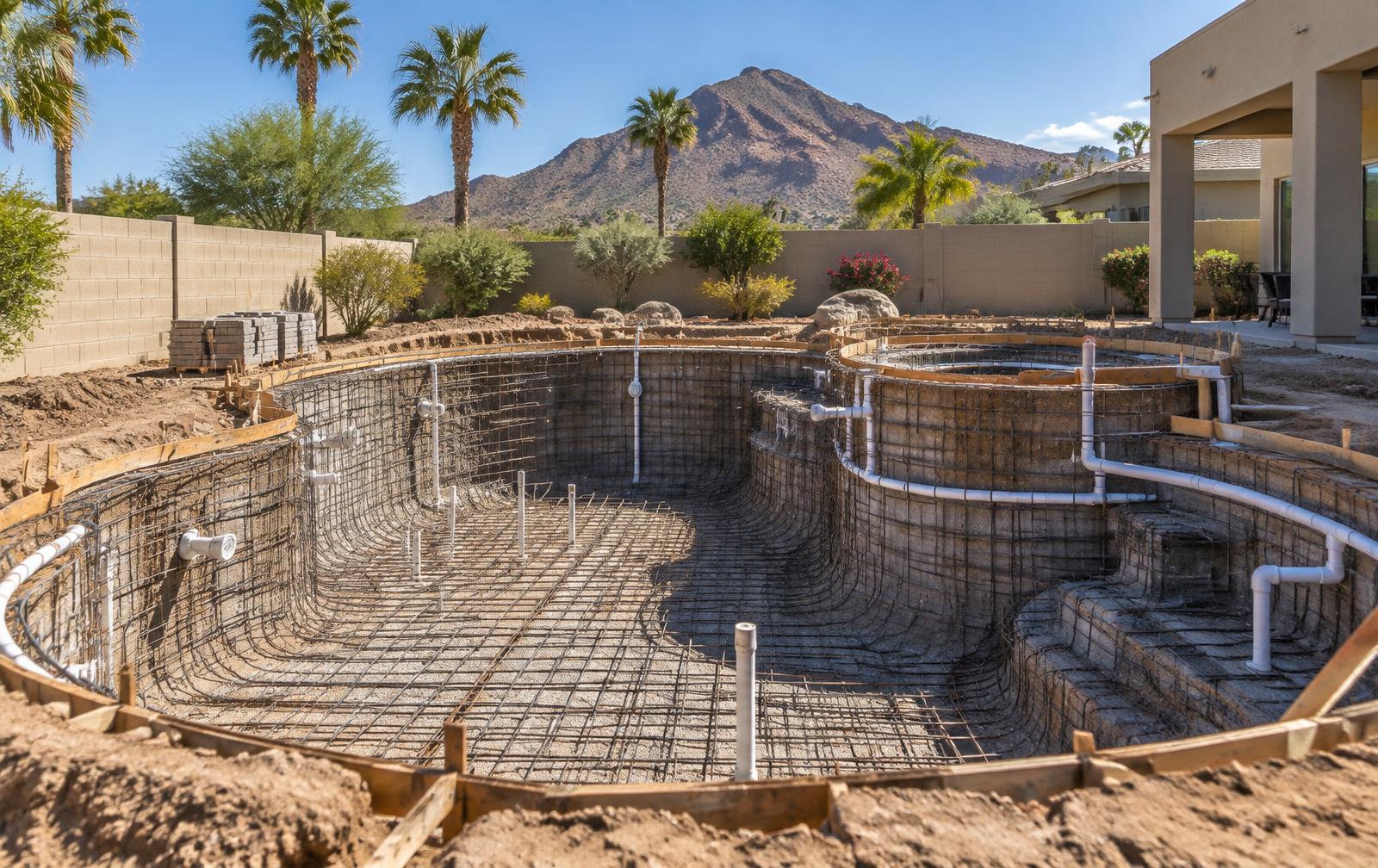
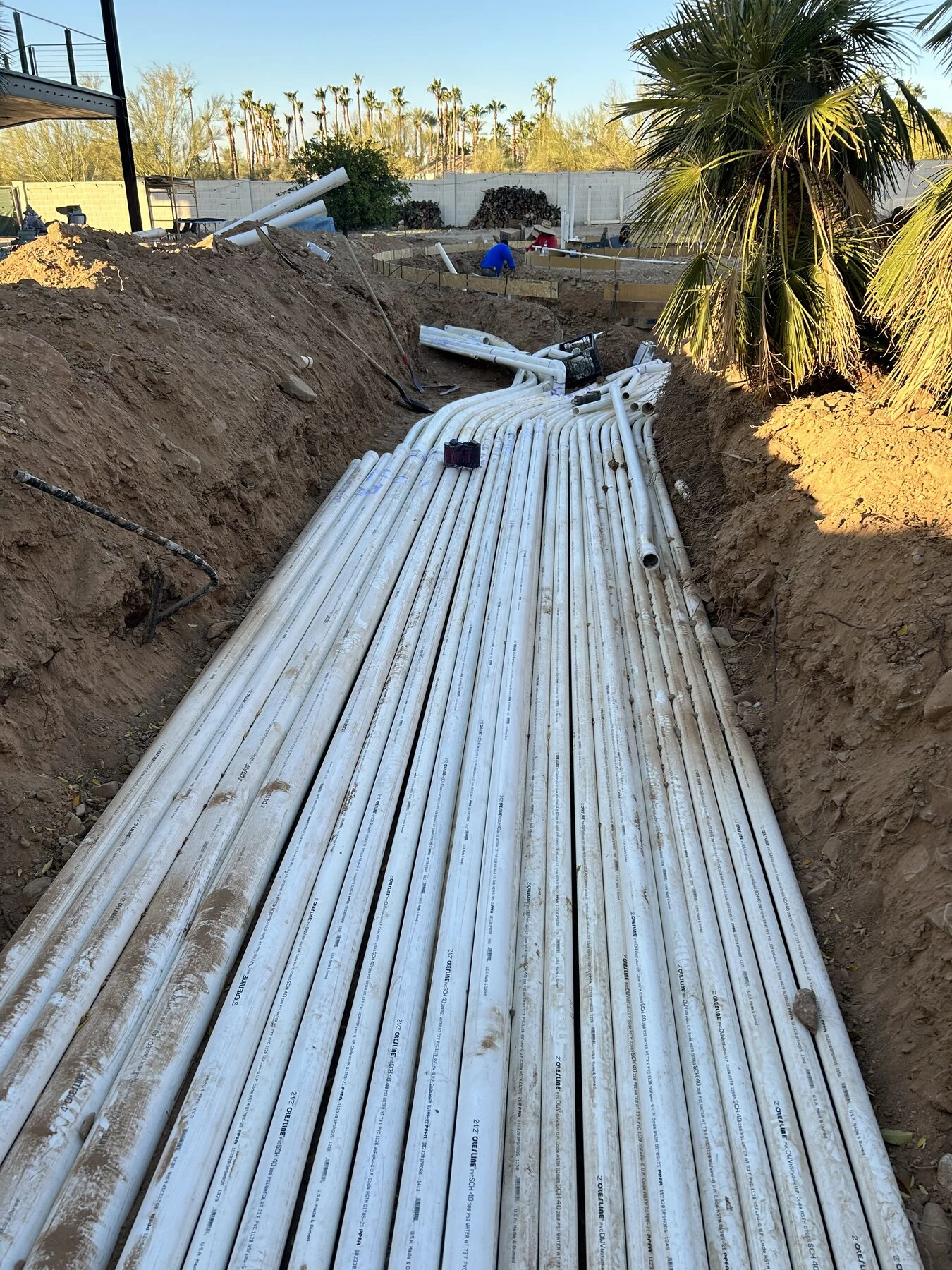
Plumbers lay the PVC pipes for the main drains, skimmers, returns, and water features. They pressurize the lines to ensure there are no leaks. Next, steel workers tie a grid of rebar across the floor and walls. This steel cage provides the structural skeleton of the pool. A city inspector must approve the steel and plumbing before the next step.
Shotcrete Application (Week 4)
A crew sprays pneumatically applied concrete, known as shotcrete, over the rebar. Applying it is a high-pressure, fast-paced event. A fleet of mixing trucks lines the street to feed the pump. The crew shapes the steps, benches, and spa walls by hand while the material is wet. Once the shotcrete sets, the pool finally takes its permanent shape. Shotcrete requires 28 days to cure and reach full structural strength. You will need to water the shell lightly several times a day during the first week to slow the drying process and prevent cracking.
Trenching, Electrical, and Equipment (Weeks 5 to 7)
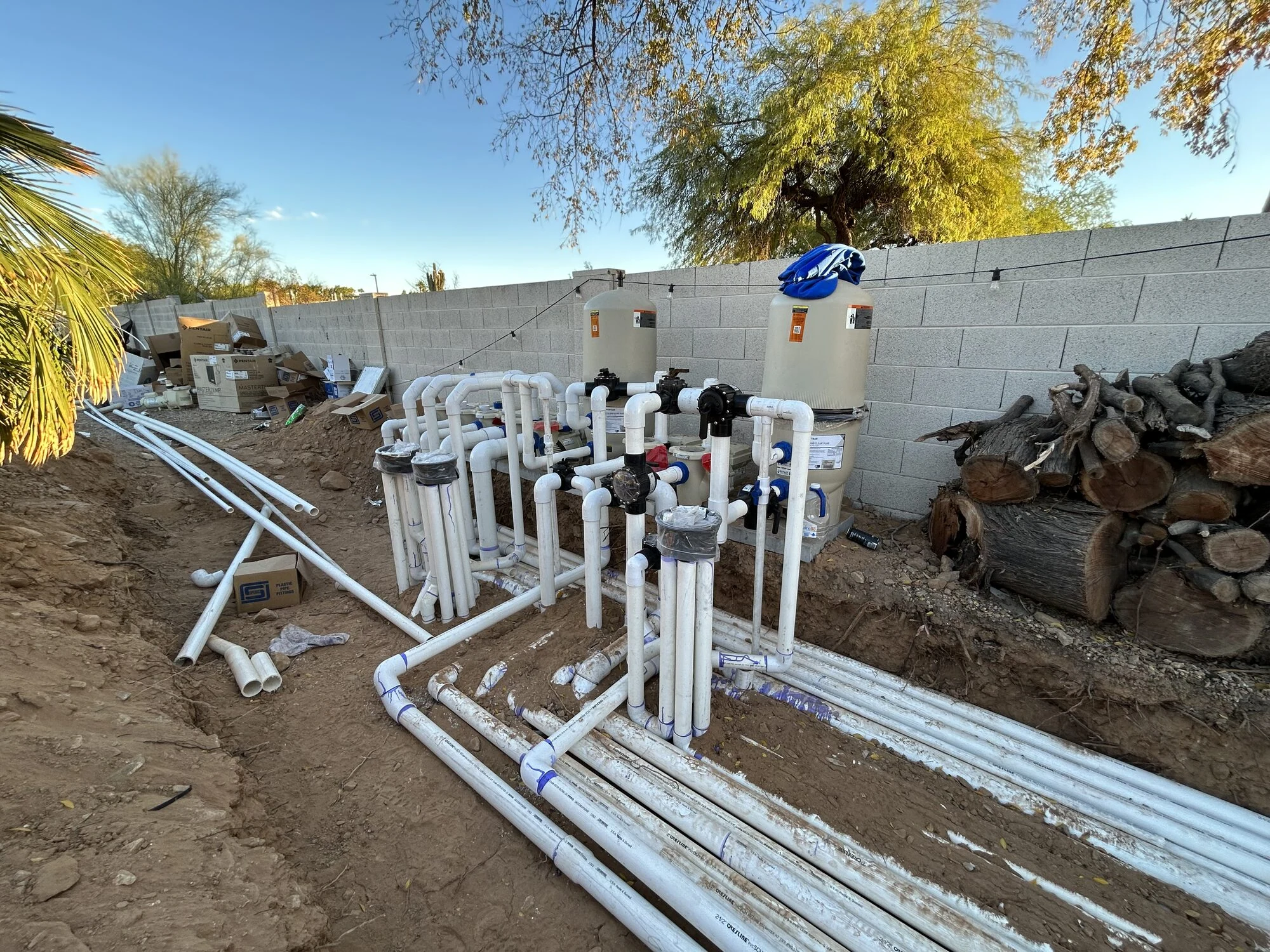
While the shell cures, work continues. Crews dig trenches to run electrical conduit and gas lines from the house to the equipment pad. Technicians set the pool pump, filter, heater, and automation panels. A licensed electrician wires the system. Another municipal inspection follows this work.
Tile, Coping, and Decking (Weeks 8 to 11)
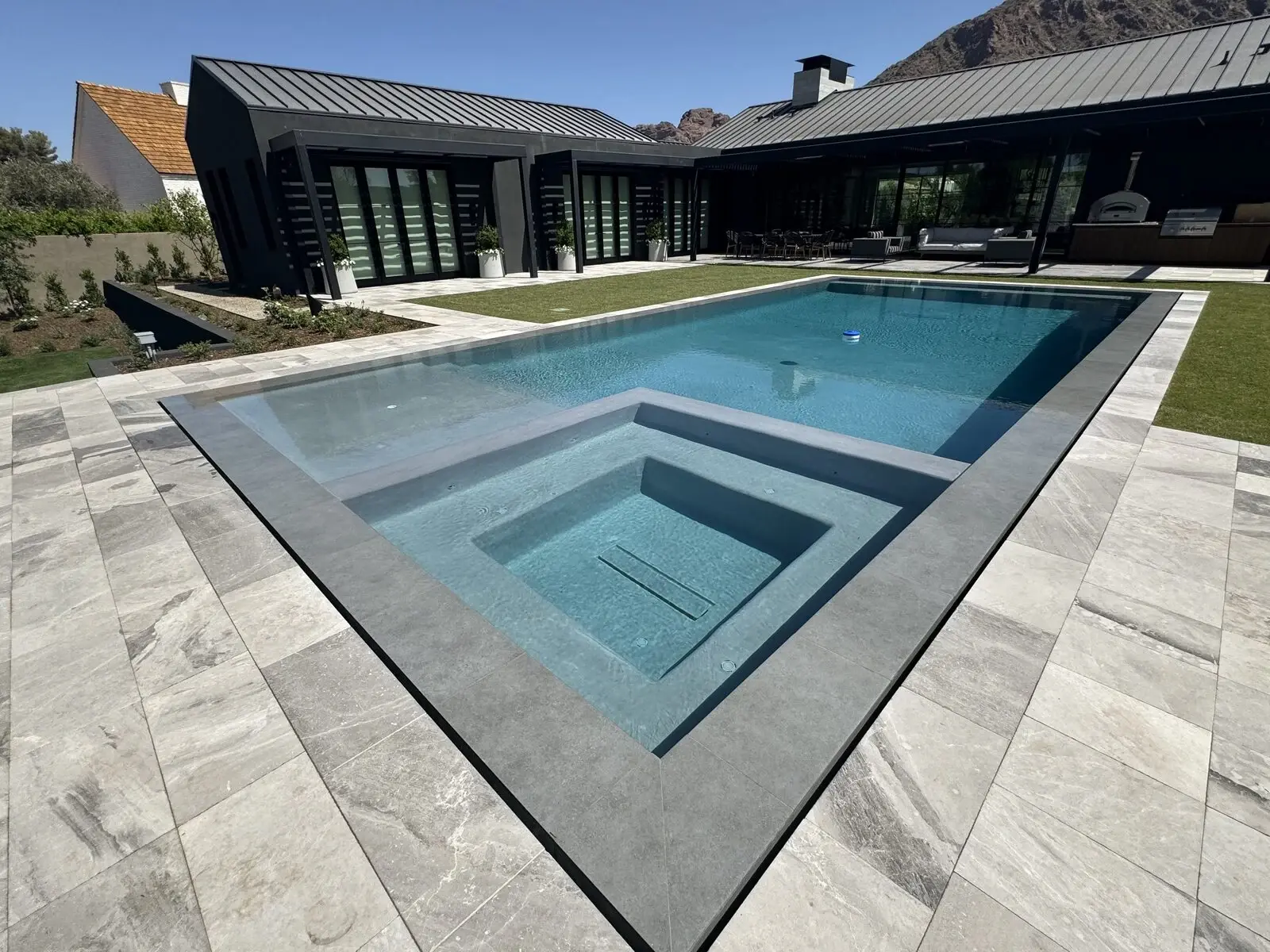
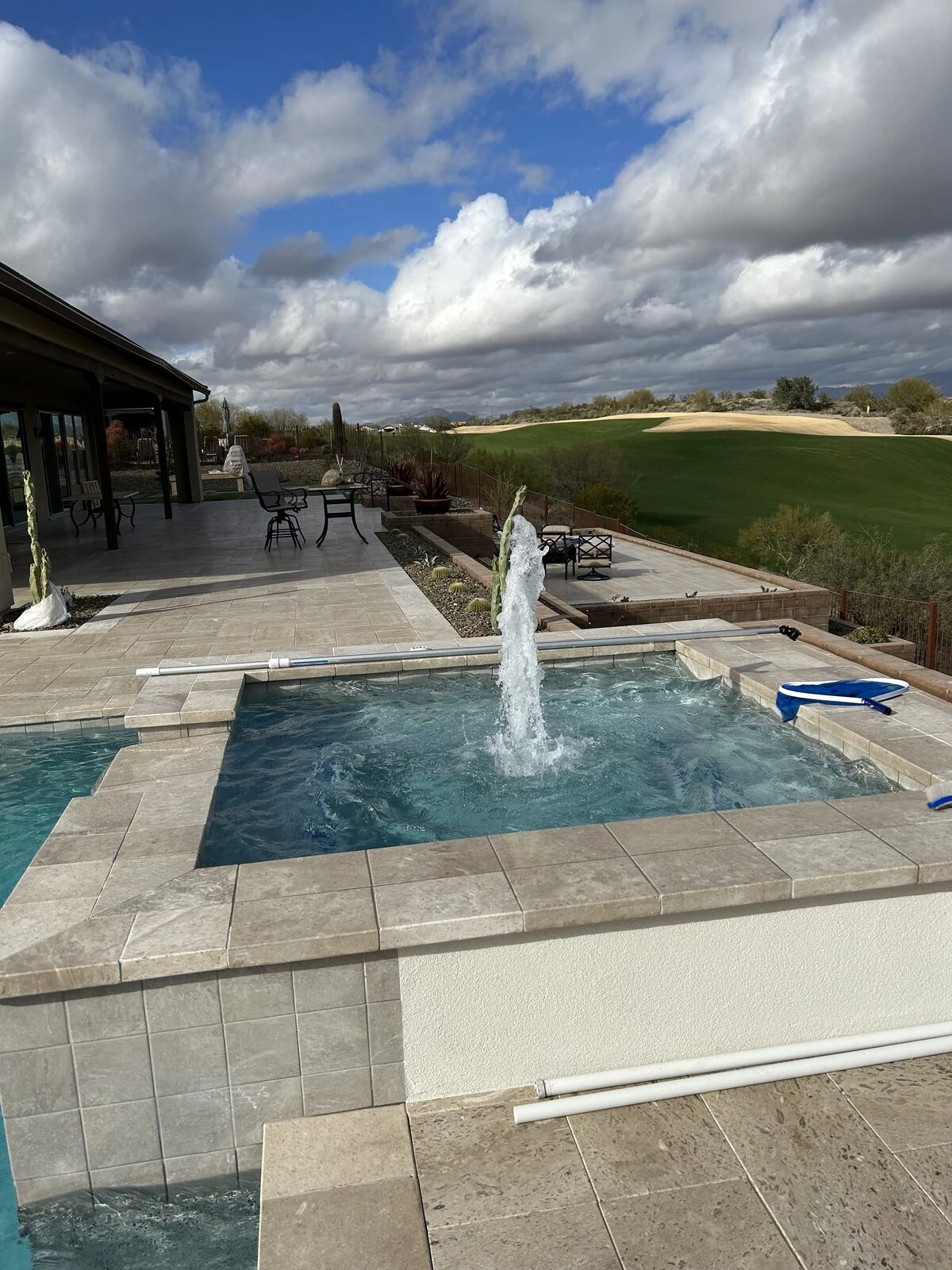
Artisans install the coping around the pool edge and place the waterline tile. Once the borders are set, the hardscape crew builds the pool deck. Whether you chose travertine pavers, exterior porcelain, or brushed concrete, this phase transforms the backyard from a construction site into a living space.
Interior Finish and Startup (Weeks 12 to 14)
The final construction step is the interior finish. Crews trowel on the plaster, pebble, or quartz surface. Pebble finishes dominate the Arizona market because they withstand the harsh water chemistry better than traditional white plaster. Installing a pebble finish is a two-day process. On day one, the crew trowels the material onto the shell. On day two, they acid wash the surface to expose the stones, creating the final texture and color.
After the acid wash, the hoses go in. You must fill the pool continuously until the water reaches the middle of the waterline tile. Stopping the water prematurely leaves a permanent ring on the fresh finish. Once full, the startup technician turns on the equipment, balances the pool chemistry, and programs your automation system.
05. What Genuinely Causes Delays
Homeowners often ask what might affect the pool construction timeline Phoenix builders provide. Some delays are avoidable. Others are acts of nature.
- Change Orders: Changing your mind after signing the contract is the fastest way to stop a project. Deciding to add a spa after excavation requires new engineering, new permits, and new steel. Deciding to change the tile color while the crew is installing it means waiting weeks for new delivery.
- Monsoon Weather: Summer storms in Arizona bring heavy rain and lightning. Crews cannot spray shotcrete or run electrical lines during a downpour. A flooded excavation site requires pumping and drying before work can resume.
- Failed Inspections: If a city inspector finds an issue, work stops until the crew corrects it and the inspector returns. This often happens with homeowner responsibilities, such as failing to install required door alarms before the final barrier inspection.
- Material Shortages: Rare or custom materials carry longer lead times. Selecting readily available, high-quality finishes keeps the schedule moving.
06. How Long to Build a Pool in Arizona Based on the Season
The time of year you dig dictates your construction experience. There is no wrong time to build a pool in Arizona, but each season carries different advantages.
Starting in the fall provides the smoothest construction process. The weather is mild, trades operate at full efficiency, and shotcrete cures perfectly in moderate temperatures. A fall start guarantees your pool is ready for heating by early spring.
Winter and early spring are the busiest times for pool builders. Homeowners realize summer is approaching and rush to sign contracts. Starting in February usually means you will swim by June, provided permitting goes smoothly.
Summer builds face extreme heat and monsoon risks. Crews start before sunrise and stop by early afternoon to avoid heat exhaustion. However, summer starts mean your backyard is ready for prime entertaining season in the fall.
07. Frequently Asked Questions
Can you build a custom pool in 30 days?
No. A custom concrete pool requires a 28-day cure time for the shotcrete alone. Rushing this process compromises the structural integrity of the shell. Anyone promising a 30-day custom build is bypassing critical engineering standards.
Does a pool remodel take as long as a new build?
Pool remodeling is significantly faster. Because the shell is already in the ground, remodels skip excavation, steel, and shotcrete. A standard resurfacing and tile replacement takes three to five weeks. Major renovations involving new plumbing or shape changes take six to eight weeks.
Do I need a fence before the pool is filled?
Yes. Arizona law requires a permanent, code-compliant barrier before water goes into the pool. The city inspector will not sign off on the final pre-plaster inspection until gates, fences, and door alarms are active.
08. Start Your Phoenix Pool Design Today
Understanding the construction timeline helps you plan your backyard transformation without the stress of unrealistic expectations. Building a luxury pool requires exact engineering, skilled trades, and relentless project management.
Sun America Pools & Spas delivers precise scheduling and elite craftsmanship to homeowners in Phoenix, Scottsdale, Paradise Valley, Chandler, Gilbert, and Mesa. We handle the design, the permits, and the daily oversight so you can focus on enjoying the final result.
Contact Sun America Pools & Spas today to schedule your site evaluation and begin the design process.