 Blog
The First Step Before Construction Begins
Before a shovel touches the dirt, a new pool must be approved by the local municipality. Securing the pool building permits Phoenix AZ homeowners need is a rigid, document-heavy process. It takes anywhere from two to eight weeks, depending on the city, the time of year, and the complexity of the design.
The timeline is driven by municipal workloads and the precision of the submitted plans. The city plan reviewer does not simply stamp a drawing. They verify that the proposed structure complies with zoning laws, structural engineering standards, and safety codes.
A building permit is not a simple permission slip. It is a legal agreement guaranteeing that the pool will be built to specific structural, electrical, and hydraulic codes designed for public safety and long-term durability.
Sun America Pools & Spas has managed plan reviews, engineering, and inspections across Phoenix, Scottsdale, Paradise Valley, Chandler, Gilbert, and Mesa since 1985. Our design-build process handles the permitting paperwork entirely, so homeowners never have to guess at municipal codes or wait in line at the planning department.
Phoenix Pool Permit Requirements and Submittals
A complete permit application requires a highly detailed plan set. Municipalities reject incomplete applications immediately. The plan set must provide exact specifications for every phase of the build.
Site Plans and Property Lines
The site plan shows the exact dimensions of the property. It details the footprint of the existing house, the location of property walls, and the exact proposed location of the pool. The city uses this drawing to verify setbacks. A setback is the minimum required distance between the pool water and the property line. Setback rules vary by city. Building a pool closer to a block wall than the standard setback allows requires special structural engineering to ensure the wall does not collapse into the excavation.
Structural Engineering
Arizona soil conditions range from hard caliche to expansive clay. The structural engineering documents dictate how the pool shell must be built to survive in the ground. This includes the rebar schedule (the thickness and spacing of the steel grid), the required compressive strength of the shotcrete, and specific details for structural features like vanishing edges or raised spa walls.
Plumbing, Mechanical, and Electrical
The permit application must outline the hydraulic system. This shows pipe sizing, pump locations, filtration systems, and gas line routing for pool heaters. The electrical layout details the power run from the main house panel to the pool equipment pad. It also maps out the bonding wire path, which is a critical safety measure that prevents electrical shocks by connecting all metal components near the pool.
Swimming Pool Permits Versus HOA Approvals
Homeowners living in a managed community must secure two separate approvals. The city issues the building permit based on safety and structural codes. The Homeowners Association issues an architectural approval based on neighborhood aesthetics and community rules.
HOA architectural review committees typically check for specific details.
- Equipment visibility: Most HOAs require pool pumps and filters to be hidden behind a block wall or a solid gate so they cannot be seen from the street or common areas.
- Access and staging: The HOA will want to know where construction vehicles will park, where the dirt will be staged, and how the excavator will access the backyard.
- Feature height: Raised walls, sheer descents, or water slides often have strict height limits so they do not block a neighbor's view.
City reviewers and HOA boards operate independently. Some HOAs require the homeowner to submit city-approved plans before they will grant their own approval. Some cities require a signed HOA approval letter before they will issue the building permit. A professional pool builder coordinates this sequence to prevent administrative delays.
The Sequence of Pool Construction Inspections
Once the city issues the permit, excavation begins. However, construction does not happen in one continuous motion. The build pauses at mandatory milestones for pool construction inspections. A municipal inspector must physically visit the site to verify the work before the next trade can cover it up.
If a contractor buries a pipe or shoots concrete before the inspector signs off, the inspector will order the work destroyed and redone.
Pre-Gunite and Steel Inspection
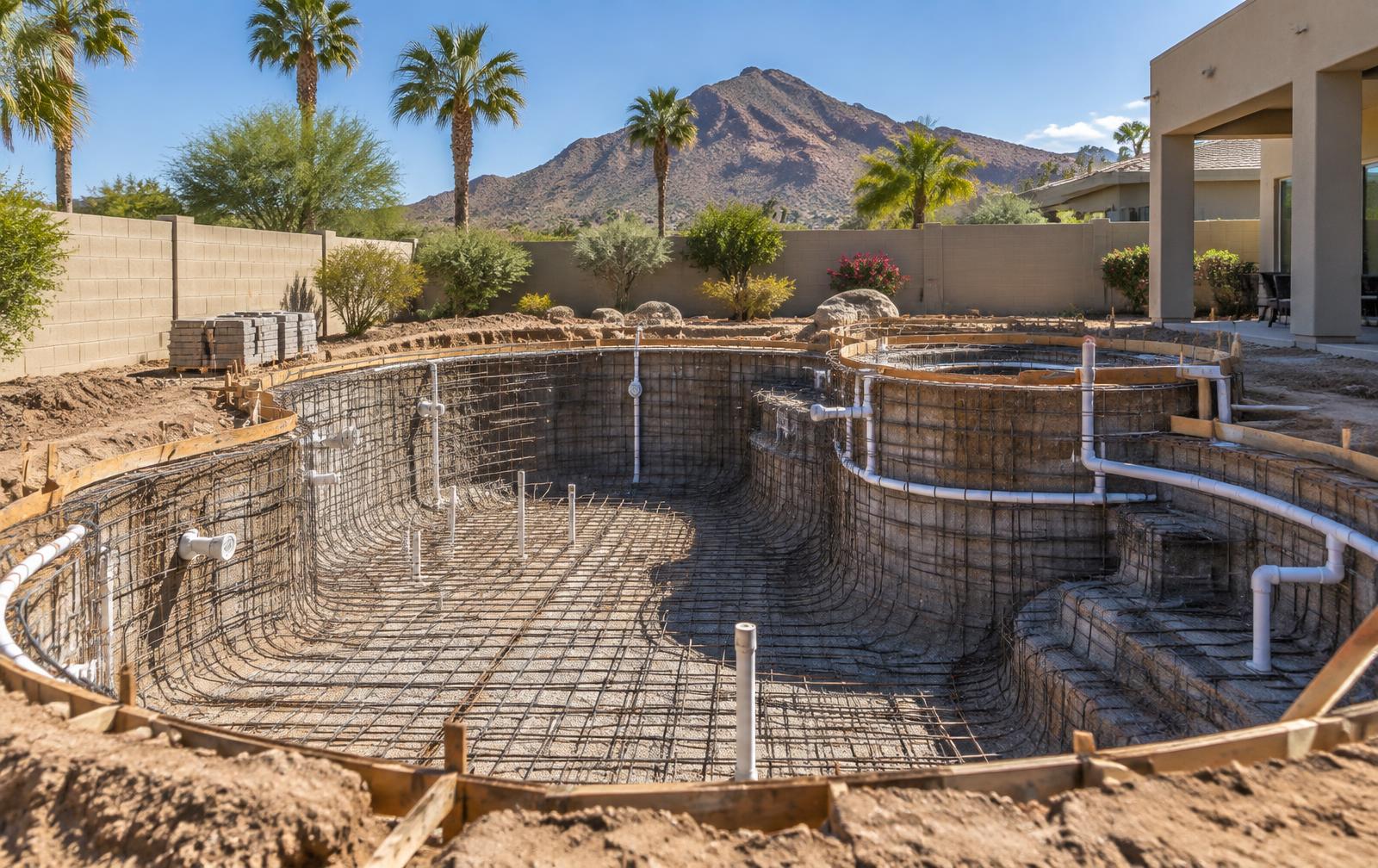
After excavation, the steel crew ties the rebar grid, and the plumbers run the initial pipes. Before the concrete trucks arrive, the inspector checks the site. They measure the spacing of the steel bars to ensure it matches the engineered plans. They also verify that the copper bonding wire is properly attached to the steel shell.
Underground Plumbing and Electrical Inspection
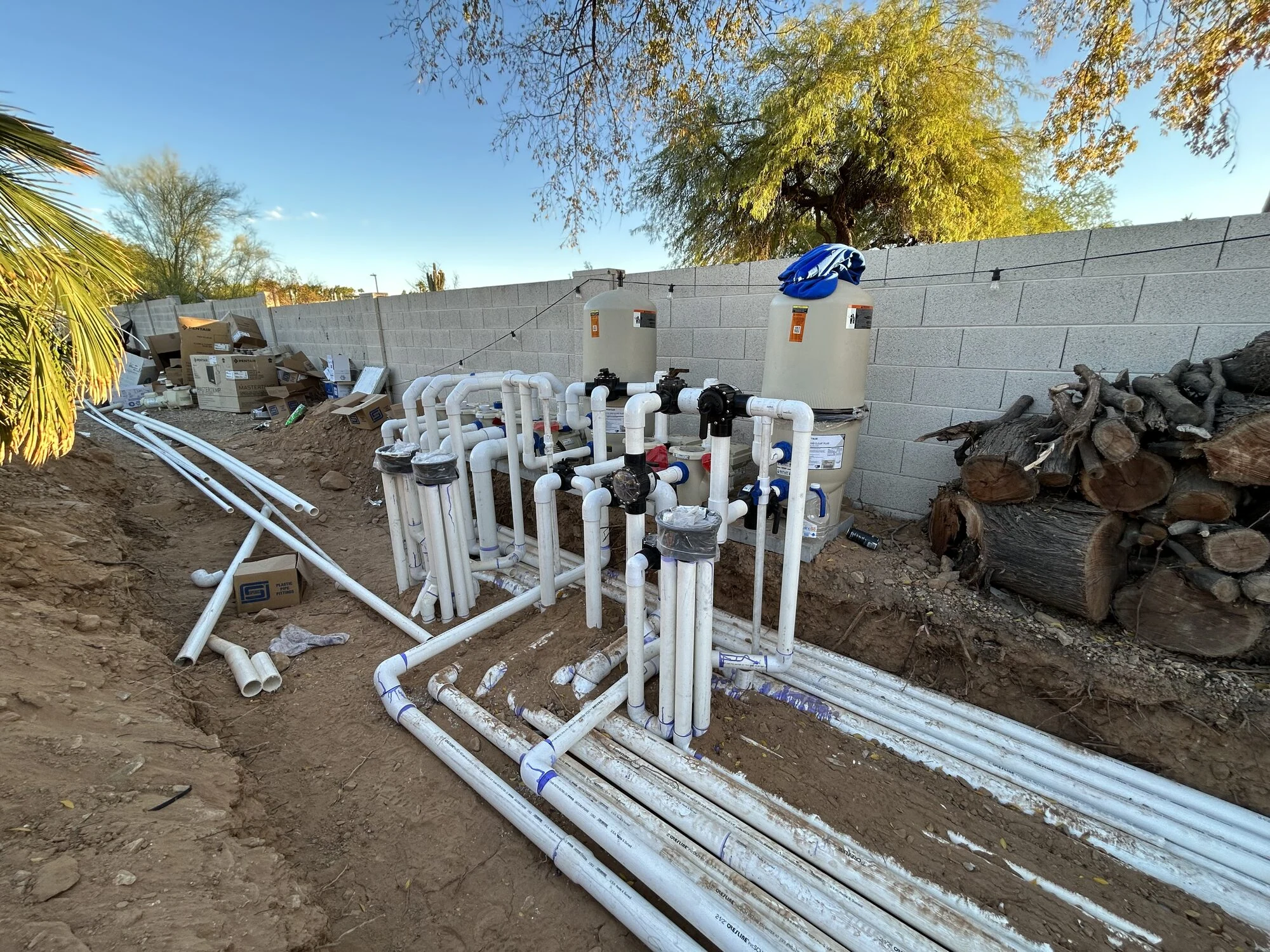
Trenches dug for pipes and electrical conduit must remain open for this inspection. The inspector verifies that the PVC pipes are pressurized to ensure there are no leaks. They also measure the depth of the electrical conduit to ensure it meets the national electrical code for buried lines.
Pre-Plaster and Barrier Inspection
This is the most strictly enforced inspection in the entire process. Before the interior finish is applied and the pool is filled with water, the site must be completely secure. The inspector tests every fence, gate, and door alarm to ensure the pool barrier meets safety codes. A pool cannot be plastered until this inspection is passed.
Final Inspection
After the pool is full of water and the equipment is running, the inspector makes one last visit. They verify that the pumps operate correctly, the electrical panel is properly labeled, and the finished project precisely matches the approved plans.
Understanding Phoenix Pool Barrier Codes
Arizona municipalities enforce aggressive barrier codes to prevent accidental drownings. The rules apply to any body of water deeper than 18 inches.
A standard property line block wall usually serves as part of the barrier. The access gates on the sides of the house must be at least five feet tall. They must be self-closing and self-latching. The latch must be located at least 54 inches above the ground to keep it out of reach of young children, and the gate must open outward, away from the pool area.
If the backyard does not have a separate perimeter fence isolating the pool, the house itself acts as the barrier. In this scenario, every door and window that provides direct access to the pool area must be secured.
- Doors: Any hinged or sliding glass door opening to the pool must be equipped with a specialized pool alarm. The alarm must sound immediately when the door is opened and must be loud enough to be heard throughout the house.
- Windows: Windows facing the pool must either be fixed in place or have specialized latches that prevent them from opening more than four inches.
Common Mistakes That Delay Permits and Approvals
Delays in the permitting phase usually happen because of poor planning or incomplete documentation. Avoiding these common errors keeps the project on schedule.
Changing the Design After Submittal
Once a plan set is submitted to the city, the clock starts. If a homeowner decides to move the pool three feet to the left, or add an attached spa, the original plans are voided. The builder must draw new plans, secure new structural engineering, and resubmit to the city. This resets the timeline back to day one.
Ignoring Utility Easements
Many properties have utility easements running along the back or side walls. These are designated strips of land where utility companies have the right to dig to access power, water, or sewer lines. You cannot build a pool structure inside an easement. Failing to map these easements on the initial site plan will result in an immediate rejection from the city.
Overlooking Access Permissions
If a backyard is too tight for an excavator to enter through the side gate, the builder might need to access the yard through a neighbor's property, an alleyway, or a community park. Driving heavy equipment over public or shared land requires a separate right-of-way permit. Failing to secure this in advance halts excavation.
Frequently Asked Questions About Pool Permits
How much do pool permits cost in the Phoenix area?
Municipal permit fees generally range from $1,000 to $2,500. The exact price depends on the specific city, the square footage of the pool, and the valuation of the project. This fee covers the initial plan review and the cost of the municipal inspector visiting the site during construction.
Can I apply for a pool permit as an owner-builder?
Yes. Most Arizona cities allow a homeowner to apply for a permit as an owner-builder. However, doing so makes you the general contractor. You become legally and financially responsible for all structural engineering, trade scheduling, worker injuries, and code compliance. Because of the liability and complexity, most homeowners hire a licensed pool contractor.
Do I need a permit to remodel an existing pool?
Yes, if the remodel changes the structure or the hydraulics. Replastering a pool or swapping an old pump for a new one usually does not require a permit. However, adding a baja shelf, changing the depth of the pool, or running new gas lines for a heater requires engineering and municipal approval.
Start Your Custom Pool Project
Navigating city codes, structural engineering, and barrier requirements requires experience. Sun America Pools & Spas has designed and built custom pools in Phoenix, Scottsdale, Paradise Valley, and the East Valley since 1985. We handle the entire permitting and inspection process, ensuring your project is built legally, safely, and on schedule. Contact us today to schedule a design consultation for your new pool.