 Key Takeaways
- Normal summer evaporation rates in the Valley
- How auto-fill systems mask severe water loss
- Step-by-step instructions for the pool bucket test
- The most common structural failure points
- Visual signs of underground plumbing leaks
- Professional detection methods and typical costs
Arizona heat drives heavy water evaporation. Most pool owners notice dropping water levels in July and blame the sun. But excessive water loss is an expensive structural threat. For effective pool leak detection in Chandler AZ, you must first isolate the variables and confirm whether the pool is losing water to the atmosphere or the soil.
A standard residential pool in the Valley loses roughly one quarter of an inch of water per day during peak summer heat. Factors like high winds, running water features, and lack of shade push this rate slightly higher. If your pool drops more than a half inch per day, you are dealing with a mechanical or structural failure.
Swimming Pool Leak Signs You Cannot Ignore
Many pool leaks go undetected for months. Small cracks or failing seals drain hundreds of gallons of water into the surrounding soil slowly. Homeowners often miss the early indicators until a major symptom forces them to act.
If your pool is losing water, the surrounding environment usually provides clues. Look for these specific swimming pool leak signs in your backyard.
- High water bills: A sudden spike in your municipal water bill is often the first financial indicator of a hidden leak.
- Soggy landscaping: Unexplained wet spots or unusually lush grass near the pool deck point to underground plumbing failures.
- Deck shifting: Water escaping under the concrete softens the soil. This causes the pool deck to sink, shift, or crack.
- Chemical imbalances: Constantly adding fresh water dilutes pool chemicals. If you struggle to maintain chlorine or pH levels, water is escaping.
- Air in the system: Bubbles blowing out of the return jets indicate a suction side leak where the pump pulls air into the lines.
- Constant auto-fill operation: An auto-fill valve that never stops running is working overtime to replace leaked water.
Automatic fill systems hide severe leaks. Because the valve constantly replaces missing water, the visual water line never drops. If you hear water running into the pool when no one is swimming, turn the system off immediately and monitor the water level.
How to Perform the Pool Bucket Test
The pool bucket test is the most reliable way for a homeowner to separate normal evaporation from an actual leak. Water inside a bucket and water outside a bucket evaporate at the exact same rate when exposed to the same air temperature and wind conditions. If the pool water drops faster than the bucket water, you have a leak.
Follow these precise steps to get an accurate reading.
1. Disable the auto-fill system. Turn off the water supply valve to the pool. If the auto-fill adds water during the test, your results will be completely invalid.
2. Fill the bucket. Bring the pool water to its normal operating level. Fill a five-gallon plastic bucket with pool water. Place the bucket on the second step of the pool. The bucket must sit deep enough in the pool so the water temperatures match, but the rim must stay above the pool water line.
3. Mark the water lines. Use a piece of electrical tape or a heavy marker. Mark the exact water level on the inside of the bucket. Then, mark the exact pool water level on the outside of the bucket.
4. Run the pump. Leave the pool pump running on its normal daily schedule. Many underground plumbing leaks only lose water when the lines are pressurized. Wait exactly 24 hours.
5. Compare the results. Check the marks. If the water inside the bucket and the water outside the bucket dropped by the same amount, your pool is simply evaporating. If the pool water level dropped significantly lower than the bucket water level, you have a leak.
Common Leak Locations in Chandler Pools
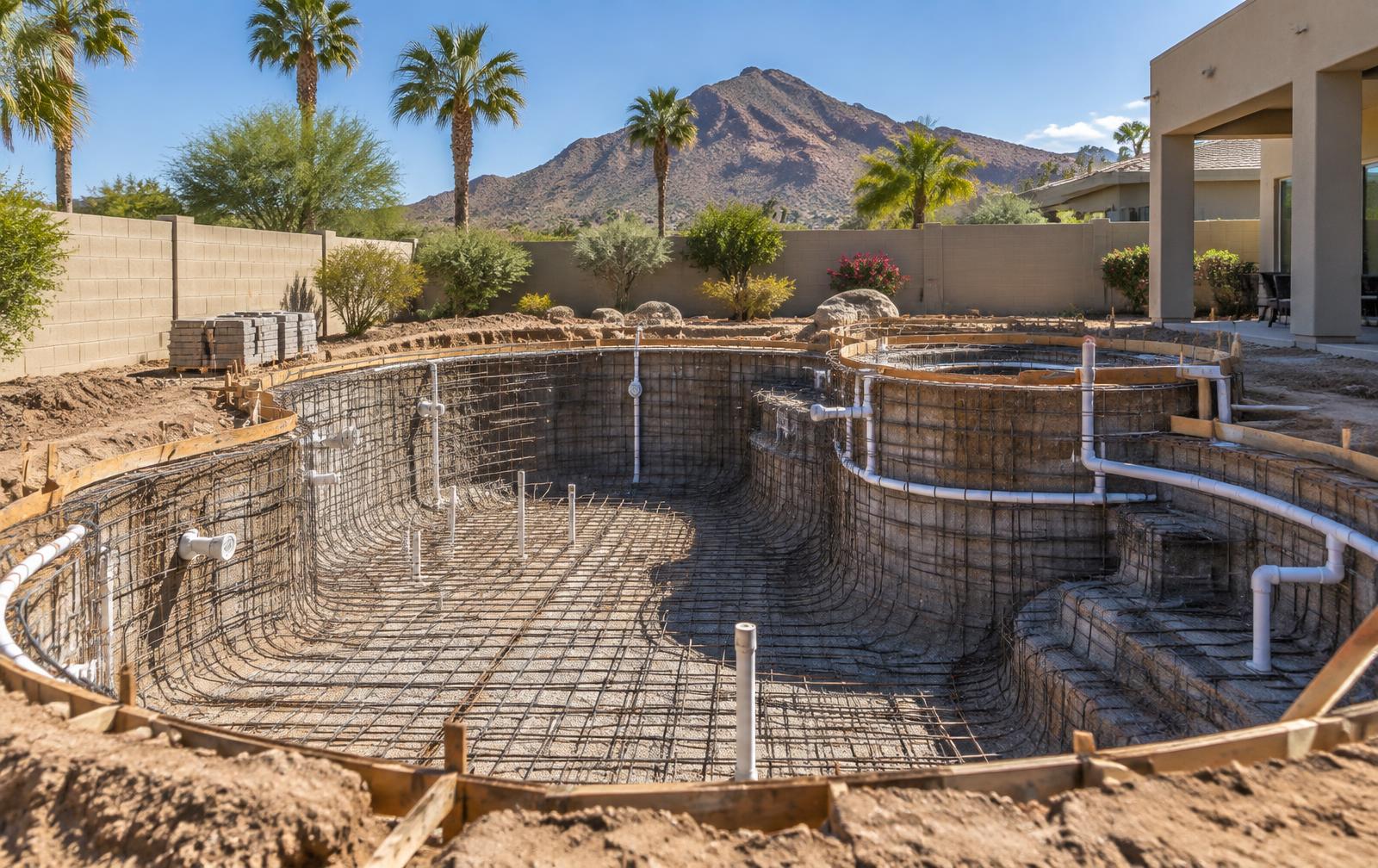
Pools are complex systems combining concrete, plastic, metal, and moving water. The extreme temperature swings in Chandler accelerate the wear on these materials. When a pool leaks, the failure usually happens in one of four specific areas.
Skimmer Throats
The plastic skimmer housing expands and contracts at a different rate than the concrete pool shell. Over time, the seal between the skimmer and the concrete breaks. This creates a crack that pulls water directly out of the pool and dumps it behind the pool wall. Skimmer leaks are the most common structural leaks in Arizona.
Light Niches
Underwater pool lights sit inside a plastic or metal housing called a niche. A conduit pipe runs from this niche to the equipment pad to carry the electrical cord. A rubber seal or putty plug keeps water from entering the conduit. Chlorine and hard water degrade this seal over time. When the plug fails, water drains directly out of the pool through the electrical conduit.
Underground Plumbing
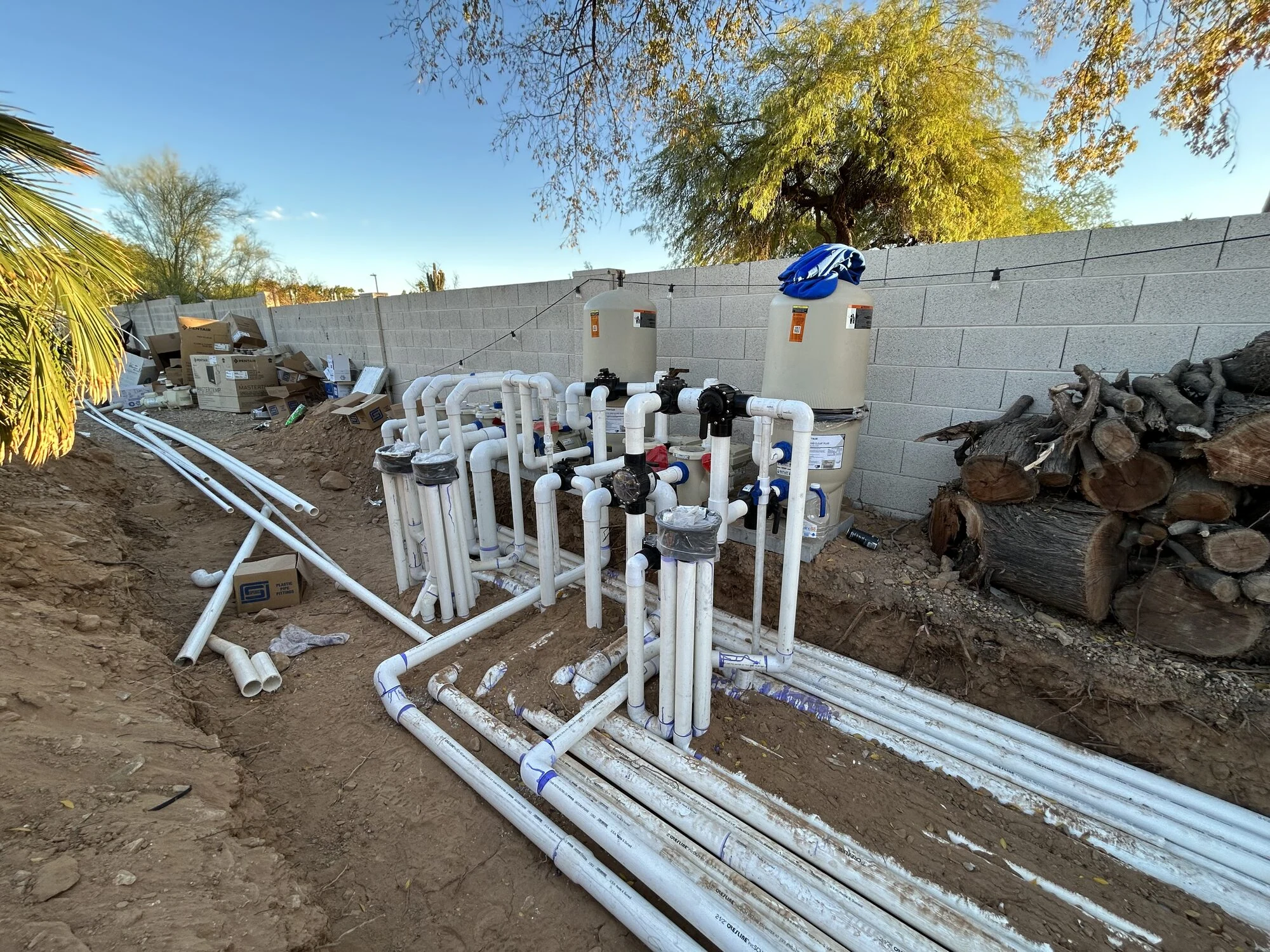
Your pool relies on a network of underground PVC pipes. Soil settlement, invasive tree roots, and constant pressure take a toll on these lines. A cracked fitting on a return line pushes pressurized water into the soil every time the pump runs. Suction side leaks pull air into the system and cause the pump to lose prime.
The Equipment Pad
Not all leaks happen underground. Inspect your pool equipment pad while the pump is running. Look for puddles beneath the filter tank, dripping pump seals, or moisture around heater connections. A failing backwash valve gasket on a sand or DE filter pushes pool water straight down the waste line without you ever seeing it.
Professional Pool Leak Detection Methods
If the bucket test confirms a leak but you cannot find obvious moisture at the equipment pad, it is time to call a professional. DIY leak detection stops at visual inspection. Professionals use specialized equipment to pinpoint exactly where the water is escaping without tearing up the yard unnecessarily.
A professional leak detection service generally follows a strict diagnostic process.
First, technicians perform pressure testing on the plumbing lines. They plug the skimmer, main drains, and return jets inside the pool. They inject compressed air and water into the lines from the equipment pad. If a line cannot hold pressure, the technician knows the underground plumbing has failed.
Second, if a line fails the pressure test, the technician uses acoustic listening devices. High-pressure air forced through a broken underground pipe creates a distinct bubbling noise. By sweeping a sensitive microphone over the concrete deck, the technician pinpoints the exact location of the break. This prevents random digging and limits deck damage during the repair.
Third, technicians use specialized dye testing to check structural seals. They inject a heavy, concentrated dye near the skimmer throat, light niches, and main drains. If there is a crack or a failed seal, the current pulls the dye directly into the void. This visually confirms structural leaks in seconds.
Frequently Asked Questions
How much water evaporation is normal in a Chandler pool?
During the peak summer months, a typical Chandler pool loses about one quarter of an inch of water per day. This adds up to roughly two inches per week. High winds, low humidity, elevated water temperatures, and running water features increase this evaporation rate.
How much does professional leak detection cost?
Professional pool leak detection in the Phoenix valley typically runs between $350 and $600. The exact price depends on the size of the pool, the number of mechanical water features, and the complexity of the plumbing system. This fee covers the diagnostic work, not the subsequent repair.
Should the pool pump be on or off during the bucket test?
You should run the pump on its normal daily schedule during the bucket test. Many plumbing leaks only push water out when the system is under pressure. Leaving the pump off for 24 hours provides an inaccurate reading if the leak is located in the return lines.
Will a pool leak cause foundation damage?
Yes. Thousands of gallons of water escaping into the soil causes severe damage over time. The water softens the earth, leading to deck settlement, cracked pool shells, and potential damage to nearby block walls or home foundations.
Securing Your Pool Investment
Ignoring a pool leak guarantees the problem will become more expensive. Small putty failures turn into flooded electrical conduits. Minor plumbing cracks wash away sub-base dirt and cause concrete decks to collapse. Identifying the signs early and running a basic bucket test protects your property from severe secondary damage.
Sun America Pools provides support, maintenance, and comprehensive remodeling services for homeowners across Chandler and the wider Phoenix valley. If your pool is losing water and you need reliable solutions, contact our team to schedule an assessment. We address the water loss and restore the integrity of your backyard investment.