 Blog
Key Takeaways
- The exact steps to clear heavy debris without damaging your pump
- How dust storms alter water chemistry and cause algae
- The correct way to clear a cloudy pool after heavy rain
- When to backwash your filter and when to call a professional
- Preventative steps to take before the next storm hits
The Immediate Aftermath of a Desert Storm
Summer weather in Arizona brings high winds, heavy rain, and massive walls of dust. When a haboob passes through the Valley, your backyard takes a direct hit. Proper pool maintenance during monsoon season in Phoenix is about acting quickly. Leaving dirt and debris in the water for even 24 hours forces your filtration system to work harder and invites rapid algae growth.
A monsoon storm dumps pounds of fine dirt, organic matter, and airborne contaminants into your water. This material consumes your free chlorine instantly.
A pool is a closed loop. Everything blown into the water stays in the water until you or your equipment removes it. Waiting a few days to clean up guarantees a chemistry imbalance and a much more expensive recovery process.
Sun America Pools & Spas has built, remodeled, and serviced custom pools across Phoenix, Scottsdale, Paradise Valley, Chandler, Gilbert, and Mesa since 1985. We know exactly what desert storms do to filtration systems. A fast, structured cleanup response is the only way to protect your equipment and keep your water safe for swimming.
Step 1: Pool Cleaning After a Dust Storm
The first phase of cleanup is entirely mechanical. Do not adjust your chemicals yet. You must remove the physical matter from the water first.
Start by clearing the surface. Use a high-quality skimmer net to remove leaves, twigs, and large debris. Work from the deep end to the shallow end. This prevents heavy organic matter from sinking and staining your plaster or pebble finish.
Next, check your skimmer baskets and pump baskets. A single night of high winds can pack these baskets tight with mesquite leaves and dirt. A clogged basket chokes off water flow to your pump. If your pump runs dry, the motor can burn out within hours. Empty every basket completely.
Once the large debris is out, focus on the fine dirt. You must brush the pool walls and steps. Dust settles on the horizontal surfaces and clings to the sides. Brushing pushes this fine silt into the main drain so your filter can catch it.
Never hook up a manual vacuum and push it blindly into a thick layer of dirt and leaves. You will clog the suction line underground. If the floor is covered in heavy debris, use a leaf canister attachment or hire a professional to vacuum the debris directly to waste. This bypasses your filter and sends the muddy water straight into the sewer cleanout.
Step 2: Fixing a Cloudy Pool After Rain
Monsoon rain is not pure water. It carries atmospheric dust, pollution, and nitrogen. When a storm drops an inch of rain into your pool, it dilutes your chemistry and introduces phosphates. This is why you often see a cloudy pool after rain.
The cloudiness is either suspended particulate matter (fine dust) or the early stages of an algae bloom. Dust storms consume your free chlorine, dropping your sanitizer levels to zero. Algae feeds on the nitrogen and phosphates left behind by the rain.
Test your water immediately after completing the physical cleanup. You are checking three specific numbers:
- pH levels (monsoon rain lowers pH)
- Alkalinity (often disrupted by heavy rain)
- Free chlorine (usually depleted)
Balance your alkalinity and pH first. Chlorine is highly ineffective if your pH is too high or too low. Aim for a pH between 7.4 and 7.6.
Once the pH is balanced, you need to shock the pool. Liquid chlorine is generally the best choice for a rapid response in Phoenix. Granular shock (calcium hypochlorite) adds calcium to the water, and Arizona water is already extremely hard. Add the liquid chlorine at dusk. The desert sun degrades liquid chlorine quickly, so an evening application allows the chemical to work overnight.
Run your pool pump continuously for 24 to 48 hours after shocking. The water must circulate constantly to distribute the chlorine and push the dead organic matter through the filter.
The Role of Phosphates in Monsoon Algae Blooms
Dust storms carry agricultural dust from the outskirts of the Valley. This dust is loaded with phosphates. Phosphates are the primary food source for algae. When a storm dumps phosphates into your pool, it creates an all-you-can-eat buffet for algae spores.
Even if your chlorine levels are normal, high phosphates make algae blooms almost inevitable. You must test for phosphates after a major storm. If the levels exceed 500 parts per billion, you need to apply a commercial phosphate remover. The remover binds to the phosphates and drops them to the pool floor, where they can be vacuumed away.
Step 3: Equipment Checks and Phoenix Monsoon Pool Care
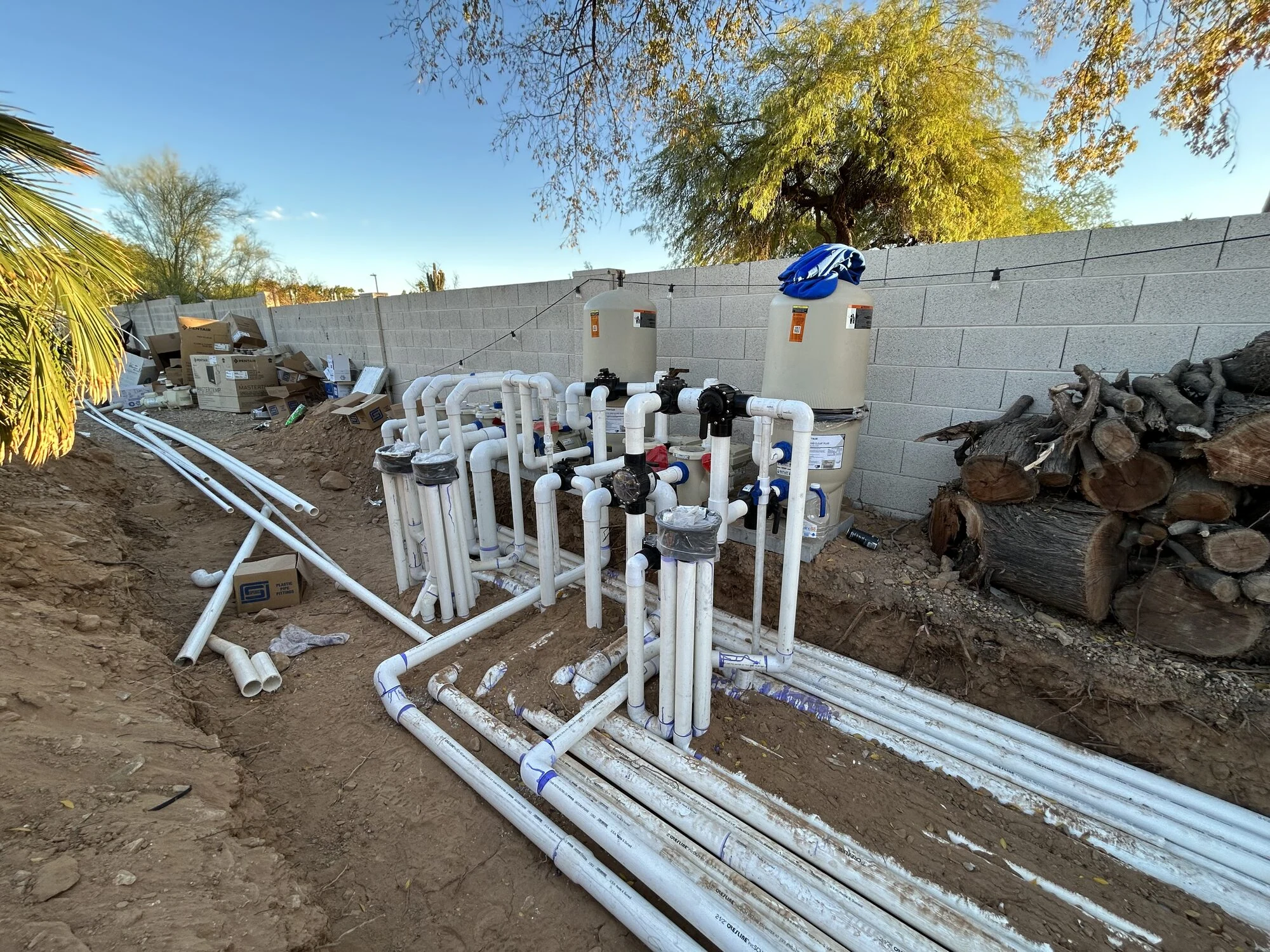
Your equipment pad works overtime during July and August. Phoenix monsoon pool care requires careful attention to your filtration system. The filter is the only thing standing between cloudy water and clear water.
Check your filter pressure gauge. The baseline pressure on a clean filter is typically between 15 and 20 PSI. If your gauge reads 10 PSI higher than your normal clean pressure, the filter is full of storm dirt. It cannot pass water efficiently.
If you have a sand or diatomaceous earth (DE) filter, you must backwash the system. Backwashing reverses the water flow and flushes the trapped dirt out to your waste line. If you have a cartridge filter, backwashing is not an option. You must turn off the system, open the filter tank, remove the cartridges, and hose them down manually.
If you have a saltwater pool, monsoon rain dilutes your salt concentration. The salt cell requires a specific salinity range (usually between 3,000 and 3,500 parts per million) to generate chlorine. If heavy rain drops the salinity below the minimum threshold, the cell will shut down automatically. You must test the salt level and add pool-grade salt to restore chlorine production.
Check the equipment pad for signs of water damage. Heavy rain can cause localized flooding around your pool pump. If the pump motor was submerged during a flash flood, do not turn it on. Water inside the electrical housing will short out the motor. Call a licensed pool technician to inspect the equipment.
Inspect your automatic pool cleaner. In-floor cleaning systems and robotic vacuums pick up small debris, but they are easily jammed by palm fronds and large twigs. Clear any obstructions from the vacuum head and empty the debris bag.
Preventative Steps Before the Next Storm
You cannot stop a dust storm, but you can prepare your pool to handle it better. Taking action before the wind hits saves hours of cleanup later.
Secure your backyard. Store patio furniture, umbrellas, and pool toys indoors or tie them down. A patio chair blown into the pool can chip the plaster or crack the waterline tile.
Trim your trees. Mesquite, palo verde, and palm trees shed massive amounts of debris during high winds. Keep tree canopies pruned back from the edge of the water.
Turn off your pool heater or heat pump. You do not need to run heating equipment during a storm, and power surges caused by lightning strikes can damage the internal circuit boards.
Check your water level. If your pool does not have an automatic overflow line, drain an inch or two of water before a major rainstorm. This prevents the pool from overflowing into your yard and washing landscaping dirt back into the water.
If you have a smart pool automation system, use your phone to turn on the pump as soon as the wind starts blowing. Keeping the water moving while the dirt is falling prevents debris from settling into corners. Some automation systems allow you to trigger a high-speed cleaning cycle remotely.
Monsoon Pool Maintenance Timeline
| Task | Timing | Why It Matters |
|---|---|---|
| Empty skimmer and pump baskets | Within 12 hours of the storm | Prevents the pump from starving for water and overheating. |
| Skim surface and brush walls | Within 24 hours | Stops heavy organic matter from sinking and staining the finish. |
| Test and balance chemistry | Within 24 hours | Identifies depleted chlorine levels before algae can take hold. |
| Shock the pool | Evening after the storm | Kills bacteria and breaks down organic contaminants brought by rain. |
| Run the pump continuously | 24 to 48 hours post-storm | Circulates the shock and forces suspended dust into the filter. |
| Clean or backwash the filter | 48 hours post-storm | Removes the trapped storm dirt and restores proper water flow. |
Frequently Asked Questions
Why does my pool turn green so fast after a dust storm?
Dust storms carry dirt, bacteria, and algae spores. The organic matter instantly consumes your available chlorine. Without chlorine to sanitize the water, the algae spores multiply rapidly in the warm Arizona summer water.
Should I drain my pool if it is full of mud?
No. Draining a pool in the middle of the Phoenix summer is highly dangerous for the pool shell. The intense heat can dry out and crack the plaster within hours. Heavy mud should be vacuumed directly to the waste line by a professional.
How long should I run my pool pump during monsoon season?
Under normal summer conditions, a variable speed pump should run 10 to 12 hours a day. After a major storm, you should run the pump continuously for 24 to 48 hours to clear the water and filter out the fine dust.
Can I swim in the pool after a heavy rain?
You should wait until the water is clear and the chemistry is balanced. Rainwater introduces contaminants, and cloudy water is a safety hazard because you cannot see the bottom of the pool. Test the water and ensure chlorine levels are safe before swimming.
Professional Support for Your Phoenix Pool
Managing a pool through the Arizona summer requires constant vigilance. One missed step after a storm can turn a minor cleanup into a costly green pool recovery. If your equipment is struggling to keep up with the weather, it might be time for an upgrade.
Sun America Pools & Spas provides expert pool remodeling, equipment upgrades, and custom pool construction throughout the Greater Phoenix Valley. If your filtration system is outdated or your pool needs a complete renovation to handle the desert climate, we can help. Contact us today to schedule a consultation and ensure your backyard is equipped for every season.