 Blog
BlogKey Takeaways
- The realistic lifespan of standard plaster, quartz, and pebble finishes in the desert climate.
- Physical signs of failure, including delamination, chalking, and rough patches.
- How material selection directly dictates durability and maintenance requirements.
- Realistic cost ranges based on material choice and required structural prep work.
- The step-by-step demolition and application process.
- The critical importance of the 28-day chemical startup period.
A plaster or pebble pool interior is a wear item. The hot, mineral-rich water in Arizona degrades these cement-based materials over time. Knowing when to plan for pool resurfacing in Phoenix prevents minor surface wear from becoming a major structural issue.
Delaying a necessary resurface forces the structural gunite shell to absorb water. Once water penetrates the gunite, it rusts the internal steel rebar, causing the shell to crack and bleed rust into the pool. What starts as a basic maintenance task quickly turns into an expensive engineering repair. A fresh, properly applied surface creates a watertight barrier that protects the structure, makes water chemistry easy to manage, and transforms the look of the backyard.
A worn pool surface does more than look bad. It creates a porous environment where algae breeds, calcium builds up, and water chemistry becomes impossible to balance.
01 | Why the Arizona Environment Accelerates Surface Wear
Swimming pools in the Valley operate in a brutal environment. High summer temperatures speed up chemical reactions in the water. High evaporation rates concentrate calcium and total dissolved solids. The municipal water itself is inherently hard right out of the tap, loaded with calcium and magnesium.
When water chemistry fluctuates out of the ideal range, the water seeks balance by pulling minerals directly out of the pool walls. This process slowly dissolves the cement that holds the plaster or pebble aggregate together. Alternatively, when calcium levels spike too high, the water deposits rock-hard scale across the surface.
Over five to fifteen years, this constant chemical stress breaks down the physical structure of the interior finish. Routine maintenance, regular brushing, and weekly chemical balancing extend this timeline, but every cementitious surface eventually requires replacement. Understanding this lifecycle helps homeowners budget for the inevitable rather than spending money on ineffective chemical fixes.
02 | Signs It Is Time for Swimming Pool Resurfacing
Age alone does not dictate when to resurface a pool. Some finishes fail in five years due to poor chemistry management, while others last twenty years under precise care. You can determine the true condition of your pool by looking for specific physical and visual changes.
Rough Texture and Abrasive Walls
As the cement degrades, the aggregate material becomes completely exposed. Standard plaster should feel smooth to the touch. When it wears thin, it develops sharp, jagged edges that scrape feet, tear skin, and snag bathing suits. This is irreversible physical damage that chemical treatments cannot fix.
Chalking and Constant Cloudiness
A deteriorating surface breaks down into fine dust. You will notice a white, chalky residue rubbing off the walls when you brush them. This dust suspends in the water and creates chronic cloudiness that defeats your filtration system. If you run your pump for twenty-four hours and the water remains milky, your plaster is likely dissolving.
Delamination and Hollow Spots
The interior finish must maintain a permanent bond with the gunite shell beneath it. When this bond fails, the plaster separates and creates hollow pockets. You can locate these areas by tapping a golf ball or a pool pole against the wall and listening for a hollow, echoing sound. Eventually, these pockets crack, pop off, and leave the structural gunite completely exposed to the water.
Rust Spots and Structural Bleeding
If you see dark brown or red rust spots blooming through the plaster, you have a structural problem. This indicates water has penetrated the surface, reached the steel rebar inside the gunite, and caused it to rust. The rust expands, pushing through the plaster. This requires immediate chipping, structural patching, and a complete resurface.
Severe Staining and Discoloration
Years of metal and mineral buildup create stubborn gray or copper stains. While a professional acid wash can remove minor surface stains, deep discoloration indicates the material has become highly porous. Once stains penetrate deep into the plaster matrix, the only remedy is a complete replacement.
03 | Interior Finish Options for a Pool Renovation
Choosing the right material changes the lifespan, water color, and texture of the pool. The three most common choices offer clear trade-offs between upfront cost and long-term durability.
Standard Plaster
Plaster is the traditional mix of white cement and crushed marble. It offers a smooth texture and creates the classic light blue water color. It is the most affordable option upfront. However, plaster is the softest material available. It is highly susceptible to chemical damage, stains easily, and shows variations in color known as mottling. Expect a lifespan of seven to ten years in Arizona conditions before it requires replacement.
Quartz Aggregate
This material blends standard plaster with ceramic-coated quartz crystals. The quartz adds significant strength and provides consistent color throughout the mix. It resists chemical wear and staining much better than standard plaster. A quartz finish typically lasts ten to twelve years. It offers an excellent middle ground for homeowners who want higher durability than plaster but prefer a smoother surface than pebble.
Pebble Finishes
Pebble is the standard expectation for modern desert pools. This finish uses river pebbles bound with fortified cement. The aggregate forms a dense, impenetrable layer that highly resists chemical damage, staining, and mineral buildup. Pebble finishes regularly last fifteen to twenty years.
Standard pebble has a noticeable texture that some find too rough for prolonged standing. Mini pebble uses smaller stones, creating a tighter matrix that feels much smoother underfoot while retaining all the durability benefits.
Glass Bead Blends and Polished Finishes
For premium custom pools, builders mix small glass beads into a mini pebble finish. This adds a brilliant, reflective quality to the water and creates an incredibly smooth texture. Another option is a fully polished finish, where the material is mechanically sanded flat after application to resemble solid granite.
Water color also plays a role in your choice. Darker finishes absorb heat and can raise the water temperature by several degrees in the summer, which is generally undesirable in Phoenix unless paired with a mechanical water chiller. Light blue or gray finishes keep the water slightly cooler and show fewer calcium deposits over time.
04 | Cost Ranges for Pool Resurfacing in Phoenix
A complete resurfacing project involves draining the water, safely removing the old material, repairing the shell, replacing drain covers to meet modern safety codes, and applying the new finish. Prices vary heavily based on the internal surface area of the pool, the chosen material, and the condition of the underlying gunite.
For a standard-sized play pool in the Phoenix area, expect the following cost ranges:
- Standard plaster: $5,000 to $7,000
- Quartz aggregate: $6,000 to $9,000
- Standard or mini pebble finish: $8,000 to $12,000
- Premium pebble with glass beads or polished finishes: $10,000 to $16,000+
These ranges change based on necessary prep work and site conditions. Limited access to the backyard means crews cannot use heavy machinery to haul away debris, increasing manual labor costs. If the old surface requires extensive pneumatic chipping to remove layers of delaminated material, demolition costs increase.
Most homeowners also replace the waterline tile during this process. The old tile is almost always damaged during the demolition of the plaster directly beneath it. Attempting to save old tile usually results in a jagged, uneven transition between the new pebble and the old ceramic. Adding new tile, fresh coping, or deck renovations will push the total project cost higher, but grouping these tasks saves money compared to doing them separately.
05 | The Resurfacing Process: What Happens in the Backyard
A standard resurfacing job takes one to two weeks of active construction, followed by a month of precise chemical management.
| Phase | Typical Duration | What Happens |
|---|---|---|
| Draining | 1 to 2 days | Water is safely pumped out to an approved municipal cleanout. Ground water relief valves are opened to prevent the empty shell from floating. |
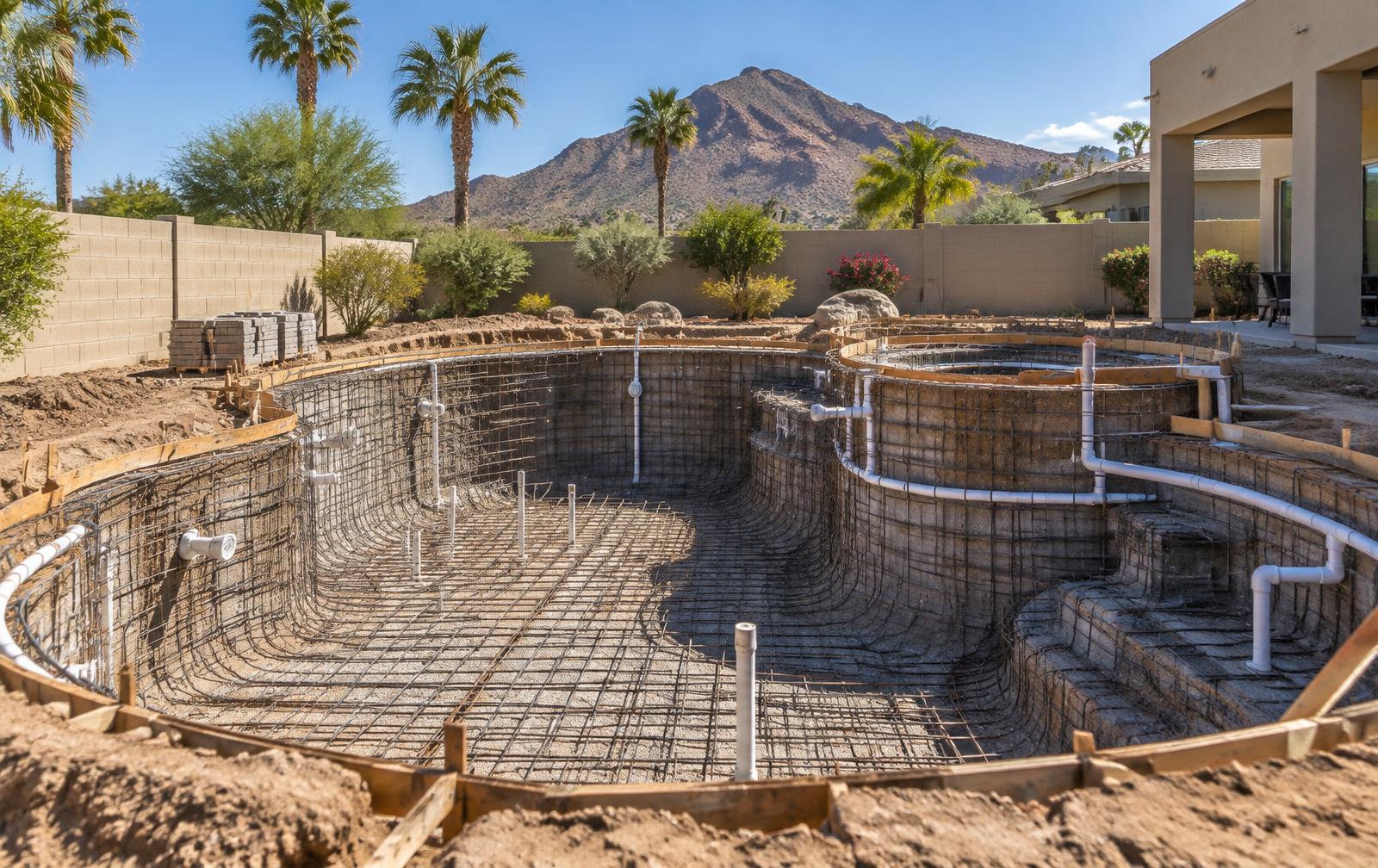
| Demolition | 1 to 3 days | Crews use pneumatic tools to chip away the old surface around fittings, lights, and the tile line. Hollow spots are completely removed down to the bare gunite. |
| Plumbing and Prep | 1 day | Main drains are replaced to meet federal VGB safety standards. The shell is cleaned, patched, and coated with a specialized bonding agent to ensure the new material adheres perfectly. |
| Application | 1 day | A large crew arrives with a mixing truck. The new material is sprayed onto the shell through heavy hoses and hand-troweled to a smooth, uniform finish. |
| Acid Wash and Fill | 1 to 2 days | Pebble finishes receive an acid wash to remove the top layer of cement and expose the stones. The pool is immediately filled with fresh water from the home supply. |
The 28-Day Chemical Startup
The project does not end when the water reaches the tile line. A new cementitious finish is highly reactive during its first month under water. The pH will spike daily as the fresh cement cures. The pool requires brushing twice a day with a nylon brush to remove plaster dust. It also requires precise daily acid additions to keep the pH balanced.
Failing to manage the chemistry during this 28-day window will cause permanent scale, calcium nodules, and staining. You cannot run an automated pool vacuum or use a pool heater during this first month, as the plaster dust will destroy the internal components.
06 | Frequently Asked Questions
Can you just paint a pool instead of resurfacing it? Pool paint is a temporary patch. It typically lasts one to two years in Arizona before it begins peeling, chalking, and clogging the filter cartridges. Painting also makes future resurfacing much more expensive. Every square inch of paint must be removed via sandblasting before a new plaster or pebble finish will adhere to the shell.
Can you apply new plaster directly over old plaster? Applying new material directly over an old, failing surface guarantees future delamination. The new finish will only be as strong as the bond beneath it. A proper installation requires chipping out the degraded areas, undercutting the tile line, and applying a specialized mechanical bond coat.
Is it safe to drain an empty pool in the summer? Draining a pool in extreme heat carries risks. The sun can severely dry out and crack exposed gunite. A professional contractor mitigates this by working fast, keeping the shell hydrated, and sequencing the demolition so the pool is empty for the shortest possible time.
Do I have to replace my waterline tile during a resurface? You do not have to, but it is the smartest time to do it. The demolition crew must chip away the old plaster directly below the tile line to create a smooth transition for the new material. This heavy vibration often chips the existing tiles. Replacing the tile simultaneously guarantees a watertight seal and modernizes the entire look of the pool.
07 | Plan Your Project With Sun America Pools
Your interior finish protects the structural integrity of your entire pool shell. Sun America Pools & Spas has rebuilt, engineered, and remodeled custom pools across Phoenix, Scottsdale, Paradise Valley, Chandler, Gilbert, and Mesa since 1985. We assess the exact condition of your gunite shell, explain your material options with total transparency, and deliver a precise scope of work. Contact us today to schedule an evaluation for your next pool resurfacing project.