 Blog
BlogKey Takeaways
- The upfront construction costs and long-term operating costs of each option.
- How Arizona summer heat and winter nights dictate spa heating strategies.
- The difference between shared pool plumbing and independent filtration systems.
- Hydrotherapy performance and seating comfort comparisons.
- Phoenix permitting, HOA approvals, and electrical requirements.
- Safety barrier codes for built-in spas versus portable hot tubs with locking covers.
01. The Backyard Spa Decision
Homeowners planning a spa installation Phoenix AZ face an immediate choice. You must decide whether to build a permanent concrete spa connected to your swimming pool or purchase a self-contained portable hot tub. Both provide hot water and relaxation. They share almost nothing else in common.
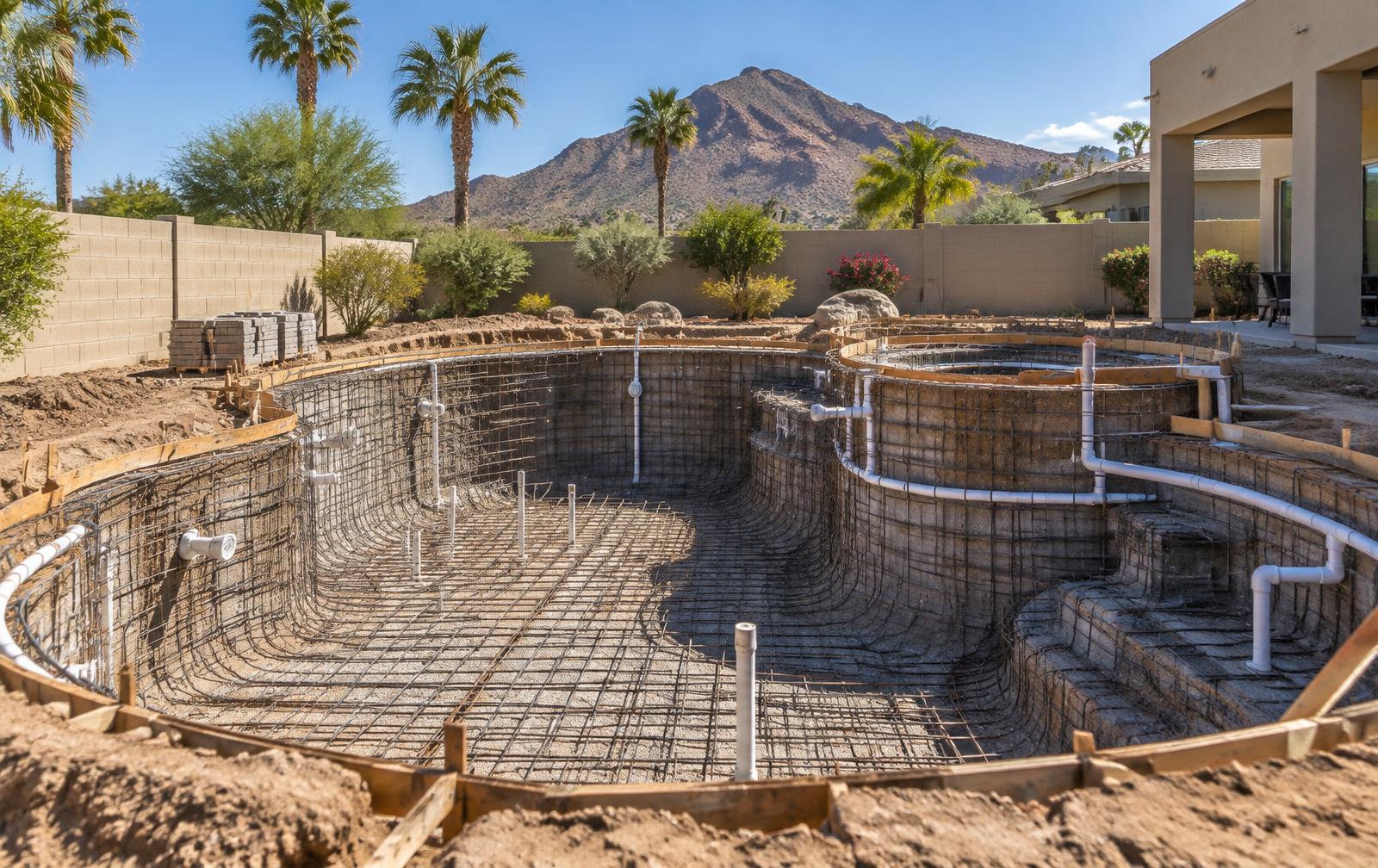
An in-ground spa is a heavy construction project. It requires excavation, plumbing trenches, steel rebar, and shotcrete. A standalone spa is an appliance. It requires a level concrete pad, an electrical connection, and water from a garden hose. The right choice depends on how you value backyard aesthetics, how often you want to soak, and your budget for upfront construction versus long-term operation.
A custom concrete spa acts as a permanent structural addition to your home architecture. A standalone hot tub prioritizes immediate therapeutic function and energy efficiency over visual integration.
Sun America Pools & Spas has designed and built custom pools and spas across Phoenix, Scottsdale, Paradise Valley, Chandler, Gilbert, and Mesa since 1985. Our owner-led design-build process ensures your spa coordinates perfectly with your backyard layout, equipment pad, and lifestyle requirements.
02. The In-Ground Pool Spa Experience
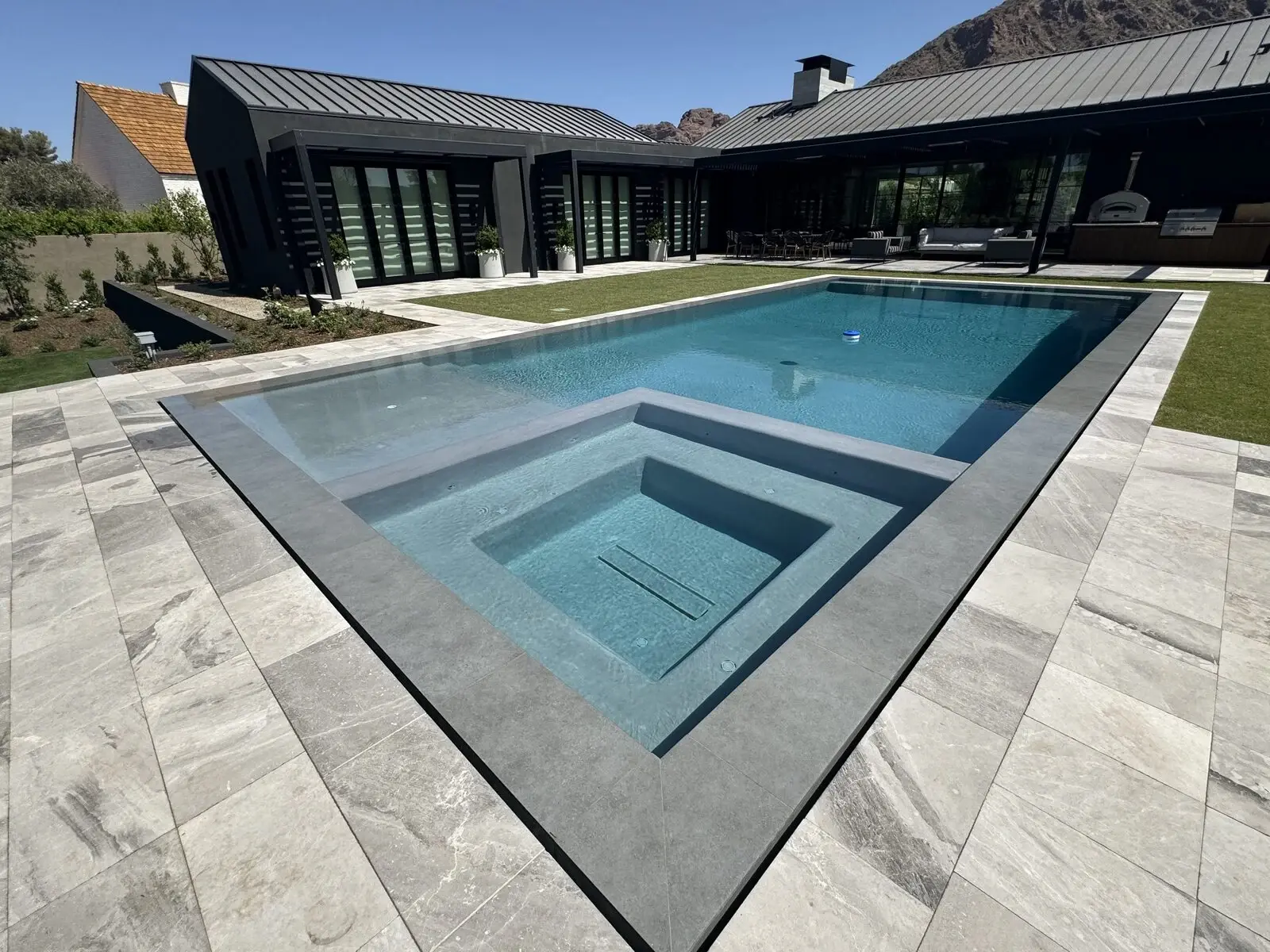
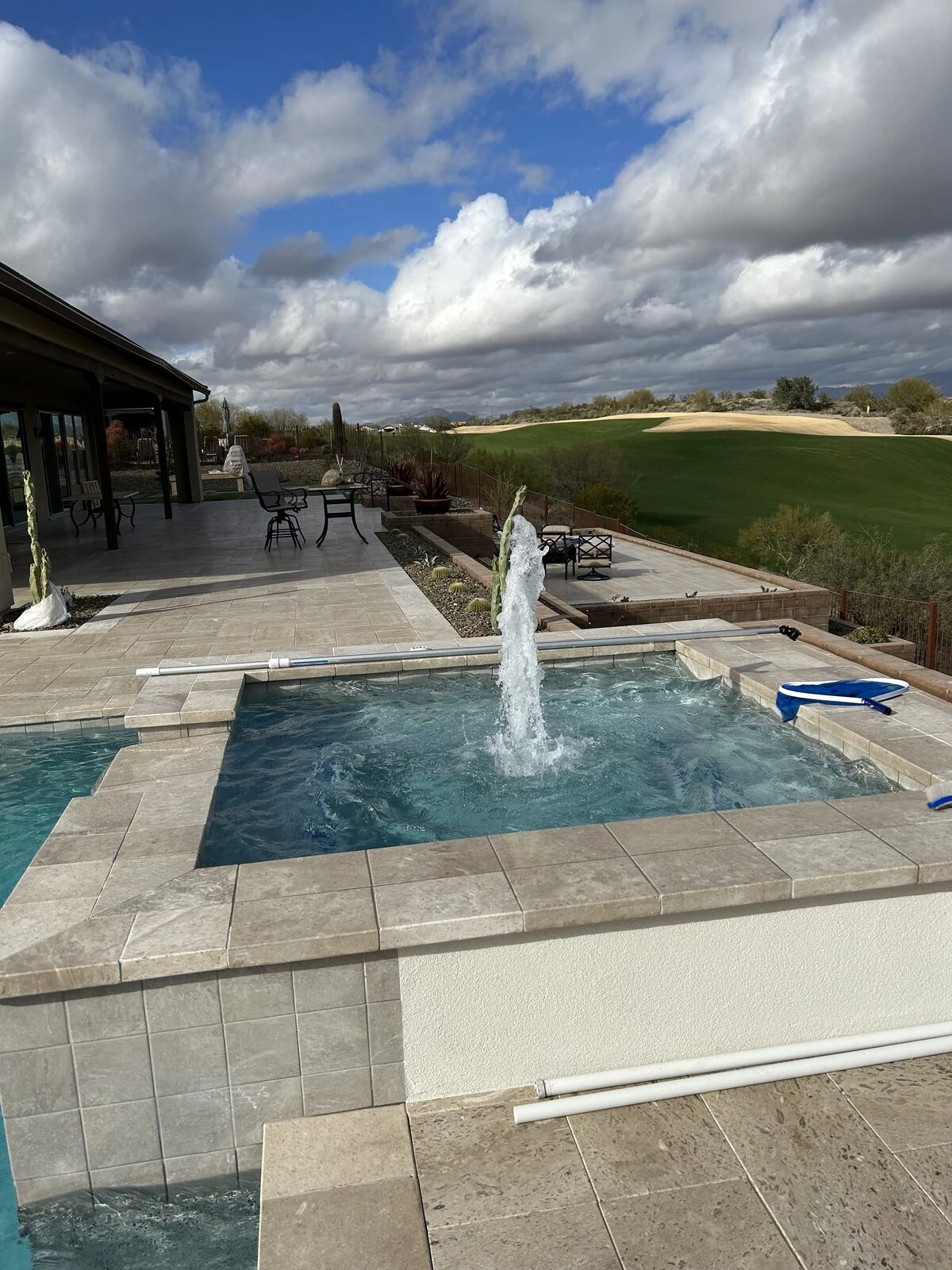
Building a custom spa Phoenix homeowners love means treating the spa as an extension of the swimming pool. These structures sit flush with the patio or slightly raised above it. They share water, filtration systems, and heating equipment with the main pool.
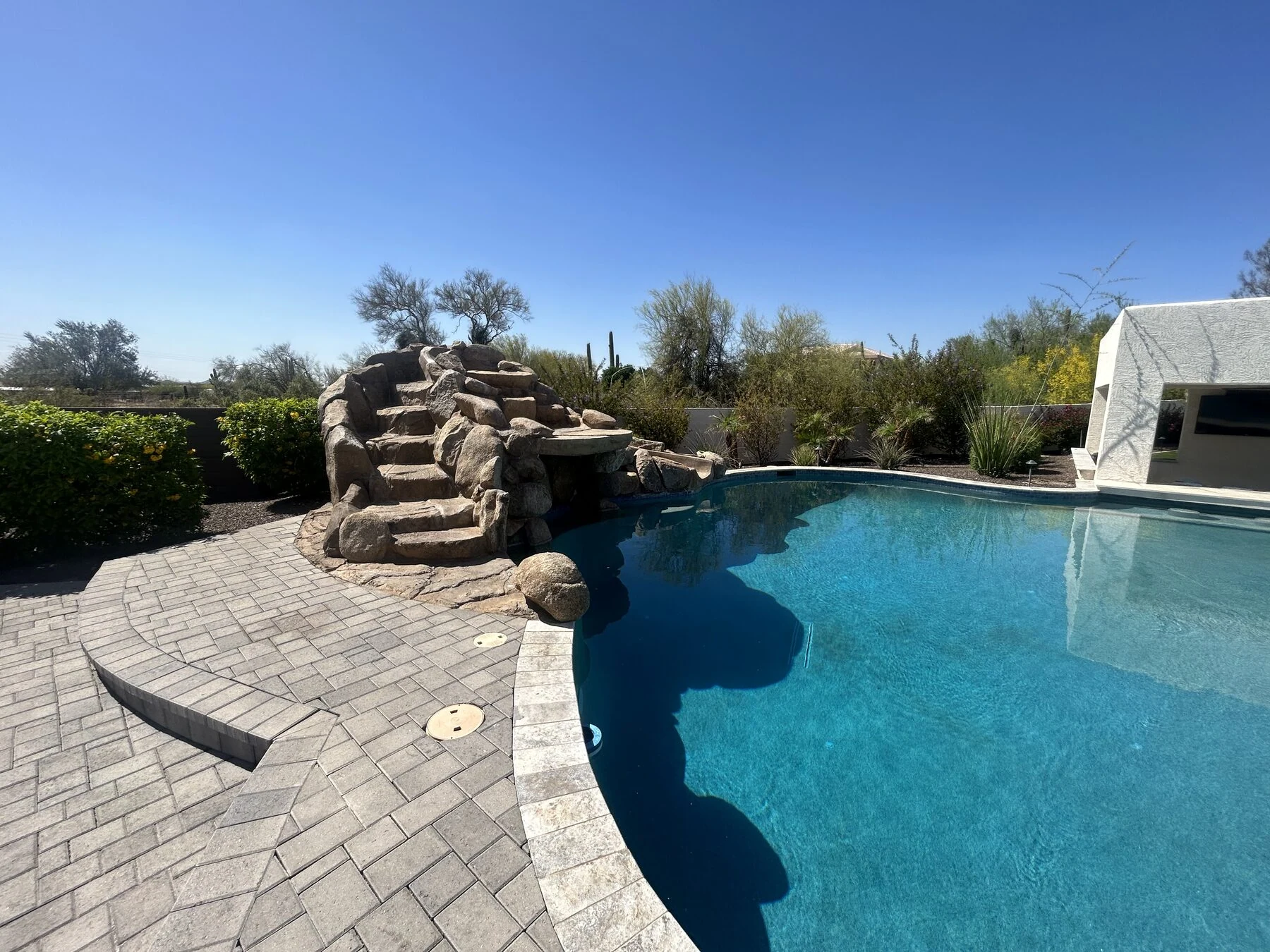
Visual Appeal and Customization The biggest advantage of a concrete spa is total design freedom. You dictate the exact dimensions, shape, and depth. You match the waterline tile, interior pebble finish, and coping to your primary pool. A raised spa often serves as a focal point, spilling water down over a stacked stone wall to create a continuous waterfall sound. This architectural integration makes the entire backyard look planned and cohesive.
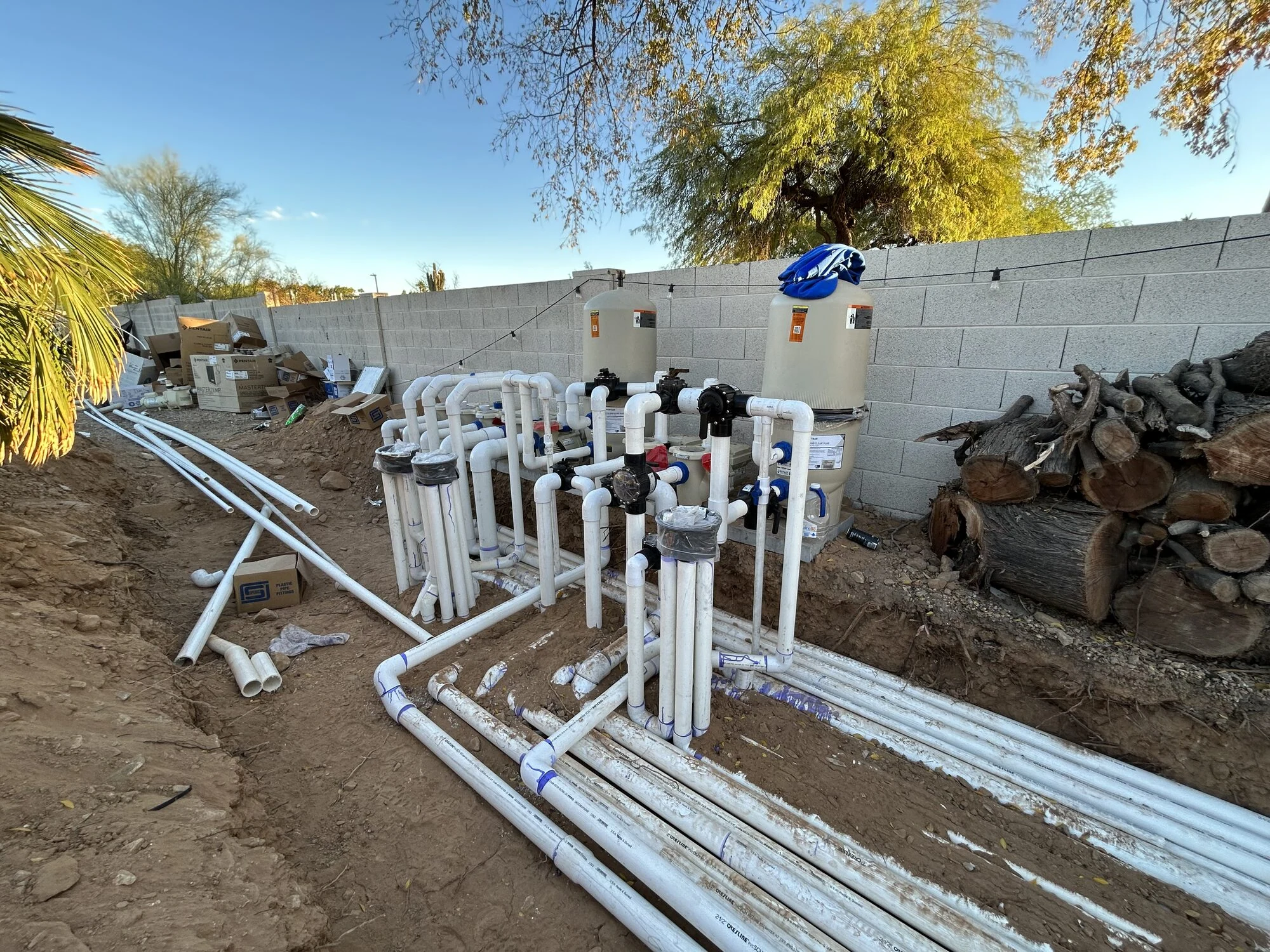
Equipment and Smart Automation An in ground spa Phoenix installation runs on the main pool equipment pad. When you activate spa mode from a smartphone app, motorized valve actuators turn automatically. This isolates the spa water from the pool. A high-capacity gas heater then fires up to warm the smaller body of water. A standard 400,000 BTU gas heater raises the spa temperature by roughly one degree per minute. You typically turn it on 30 to 45 minutes before you want to get in.
Durability and Property Value Shotcrete shells and modern aggregate finishes last for decades. Like the pool itself, an integrated spa is a permanent structural improvement to the property. It generally increases the resale value of a luxury home in the Arizona real estate market.
The Trade-offs Concrete spas cost significantly more upfront. Adding a standard spa to a new custom pool build adds $15,000 to $25,000 to the total contract. The interior seating is rigid concrete. The jets are standard return lines mixed with air, providing a gentle surface massage rather than targeted physical therapy. Since you heat it on demand, spontaneous use requires waiting for the heater to do its job.
03. The Standalone Spa Experience
Standalone spas (commonly called hot tubs) are manufactured acrylic shells surrounded by a synthetic or wood cabinet. They hold their own water, have their own dedicated pleated filters, and use an internal electric heater.
Hydrotherapy and Physical Comfort Portable spas dominate when it comes to massage quality. They feature molded, ergonomic seating designed to cradle the human body. They contain dozens of targeted jets engineered for specific muscle groups, driven by multiple high-horsepower therapy pumps. If physical therapy or chronic pain relief is your primary goal, an acrylic hot tub outperforms a concrete spa entirely.
Always Ready for Use Standalone units use high-density foam insulation and a tight-fitting vinyl cover to trap heat. The internal electric heater maintains the water at your exact target temperature 24 hours a day. You can step outside on a cold January night in Phoenix, open the cover, and get into hot water immediately without waiting.
Installation Logistics A high-quality portable hot tub typically costs between $8,000 and $18,000. Installation happens rapidly. Once the site is prepared, delivery and setup take a single afternoon. You do not need full municipal pool permits, though you must hire a licensed electrician to run a dedicated 220-volt circuit to the pad.
The Trade-offs Portable spas have a shorter lifespan. The acrylic shell, internal PVC plumbing, and proprietary circuit boards typically last 10 to 15 years in the harsh Arizona climate before requiring major overhauls or replacement. Visually, they are large appliances. Integrating them into a high-end backyard design requires clever decking, pergolas, or custom masonry walls to hide the synthetic cabinet.
04. Operating Costs in the Arizona Climate
The Phoenix environment changes the financial math of owning a spa. Summer daytime temperatures exceed 110 degrees, and winter nights drop into the upper 30s.
Heating Costs and Energy Consumption Heating a cold concrete spa with natural gas costs money every time you use it. If you heat your in-ground spa three times a week during the winter, you will see a noticeable spike in your Southwest Gas bill. Conversely, a standalone hot tub uses electricity to maintain temperature. Because they are heavily insulated, the electric cost to keep them hot is relatively low, often $30 to $50 a month depending on utility rates and usage frequency.
Water Chemistry and Hard Water An in-ground spa cycles its water with the pool daily. You maintain one body of water. The pool chlorinator or salt water generator sanitizes the spa automatically. Hard Arizona water does leave calcium scale on the spillway, which requires periodic bead blasting to remove.
A standalone hot tub requires separate, manual chemical maintenance. Hot water degrades free chlorine very quickly. You must test and balance the hot tub water manually on a regular schedule. Furthermore, because of the high total dissolved solids in Phoenix municipal water, you must drain the hot tub entirely three to four times a year and refill it with fresh water.
Summer Usability In July and August, an in-ground spa provides additional utility. You can leave the valves open and use the spa as a shallow lounging area or a play area sharing the cooler pool water. A standalone hot tub remains a hot tub. Many Phoenix homeowners lower the temperature on their standalone units to 85 degrees in the summer to use them as a plunge pool, but they lack the heavy circulation cooling of a large swimming pool.
05. Space, Engineering, and Permitting Requirements
Your property layout often dictates which option makes logistical sense.
Building with a New Pool If you are already excavating for a new custom pool, adding the spa makes complete logistical sense. The excavation crews are already on site. The equipment pad is already being wired and plumbed. The city permitting process covers both structures under one single application.
Adding to an Existing Pool Adding an in-ground spa to an existing pool is a major remodeling project. It requires breaking the concrete deck, trenching new plumbing lines across the yard to the equipment pad, upgrading the automation system, and tying new steel into the old concrete shell. The cost of a retrofit often exceeds $30,000. In this scenario, placing a standalone hot tub on a concrete pad is vastly more economical.
Space and Clearances An in-ground spa requires an equipment pad large enough to hold a 400,000 BTU gas heater. Gas heaters require specific setback clearances from windows, doors, and property lines according to Phoenix fire codes. A standalone spa requires a solid, perfectly level surface (usually poured concrete or reinforced pavers) measuring roughly eight by eight feet. A standalone unit full of water and adults can weigh over 5,000 pounds, meaning it cannot sit directly on dirt or standard landscaping rock.
06. Safety Barriers and HOA Approvals
Arizona has strict pool safety regulations to prevent accidental drownings. The type of spa you choose affects how you comply with these laws.
In-Ground Spa Barriers An in-ground spa is legally treated as a swimming pool. It requires a permanent safety barrier. This usually means your property perimeter block wall must meet specific height requirements, and all doors leading from the house to the pool area must have high-placed locks, self-closing hinges, or approved alarms.
Standalone Spa Covers Standalone hot tubs often bypass the need for door alarms or secondary fencing if they utilize a hard safety cover recognized by the American Society for Testing and Materials (ASTM). The cover must be lockable.
Homeowners Association Review Almost every HOA in the Valley requires architectural review for either option. An in-ground spa plan is submitted alongside the pool plan. A standalone spa requires submitting a site plan showing where the unit will sit, how tall it is, and whether it is visible over the perimeter fence. Many HOAs require standalone units to be screened by landscaping or placed under a patio cover to remain out of sight from neighbors.
07. Frequently Asked Questions
How long does it take to heat an in-ground spa? With a properly sized gas heater, an in-ground spa typically heats up at a rate of one degree per minute. Raising the water temperature from 55 degrees to 101 degrees takes roughly 40 to 45 minutes.
Do standalone hot tubs need city permits in Phoenix? Most municipalities in the Phoenix metropolitan area do not require a building permit for a portable hot tub itself, but you must pull an electrical permit for the new dedicated 220-volt circuit.
Can a standalone hot tub be placed partially underground? You can build a concrete vault to sink a portable hot tub into the ground, but it requires extensive planning. You must leave wide access panels around the entire perimeter for future plumbing and motor repairs. You must also install adequate drainage systems to prevent the vault from flooding and ruining the electrical components during summer monsoon storms.
Which option provides a better massage? A standalone acrylic hot tub provides a significantly better massage. They feature ergonomic seating and dozens of specialized jets driven by dedicated therapy pumps. Concrete spas offer basic air-mixed return jets and rigid seating, prioritizing appearance over physical therapy.
08. Making the Right Choice for Your Arizona Home
Choosing between an integrated concrete spa and a standalone unit comes down to how you plan to use it. If you want a cohesive architectural extension of your pool that increases home value and requires no separate water maintenance, build it into the ground. If you prioritize daily hydrotherapy, lower upfront costs, and immediate access to hot water at all times, buy a standalone hot tub.
The layout of your yard, the condition of your current pool equipment, and your aesthetic goals will heavily influence this decision. Sun America Pools & Spas can evaluate your property and design a hydraulic solution that fits your exact needs. Contact us today to schedule a consultation and begin planning your backyard construction project.