 Blog
BlogKey Takeaways
- The chemical reality of what a saltwater pool actually is
- How Arizona hard water and evaporation affect both systems
- The true long-term costs of salt cell replacements vs. Daily chemicals
- Why cyanuric acid buildup is the biggest threat to standard chlorine pools
- The specific maintenance required for a salt cell in Phoenix
- How salt water interacts with travertine decking and natural stone
- Equipment pad upgrades required for a safe salt system conversion
01 The Core Difference Between Salt and Chlorine
Homeowners constantly ask for a saltwater pool because they want to swim in a pool without chlorine. The reality is that a saltwater pool is a chlorine pool. The difference lies entirely in how the chlorine enters the water.
When evaluating a saltwater vs chlorine pool Arizona homeowners need to understand the mechanics. A traditional system requires you to manually add liquid chlorine or dissolving tablets to the water. A saltwater system uses a computerized generator to manufacture pure chlorine directly on your equipment pad.
A salt system does not eliminate chlorine. It replaces the store-bought jugs and buckets by generating continuous, pure chlorine from salt and electricity.
Sun America Pools & Spas has engineered and built custom pools across Phoenix, Scottsdale, Paradise Valley, Chandler, Gilbert, and Mesa since 1985. Through our owner-led design-build process, we size and select sanitation systems based on the exact specifications of the yard, the materials used around the deck, and the maintenance routine the homeowner prefers.
02 The Mechanics of a Saltwater Pool in Phoenix
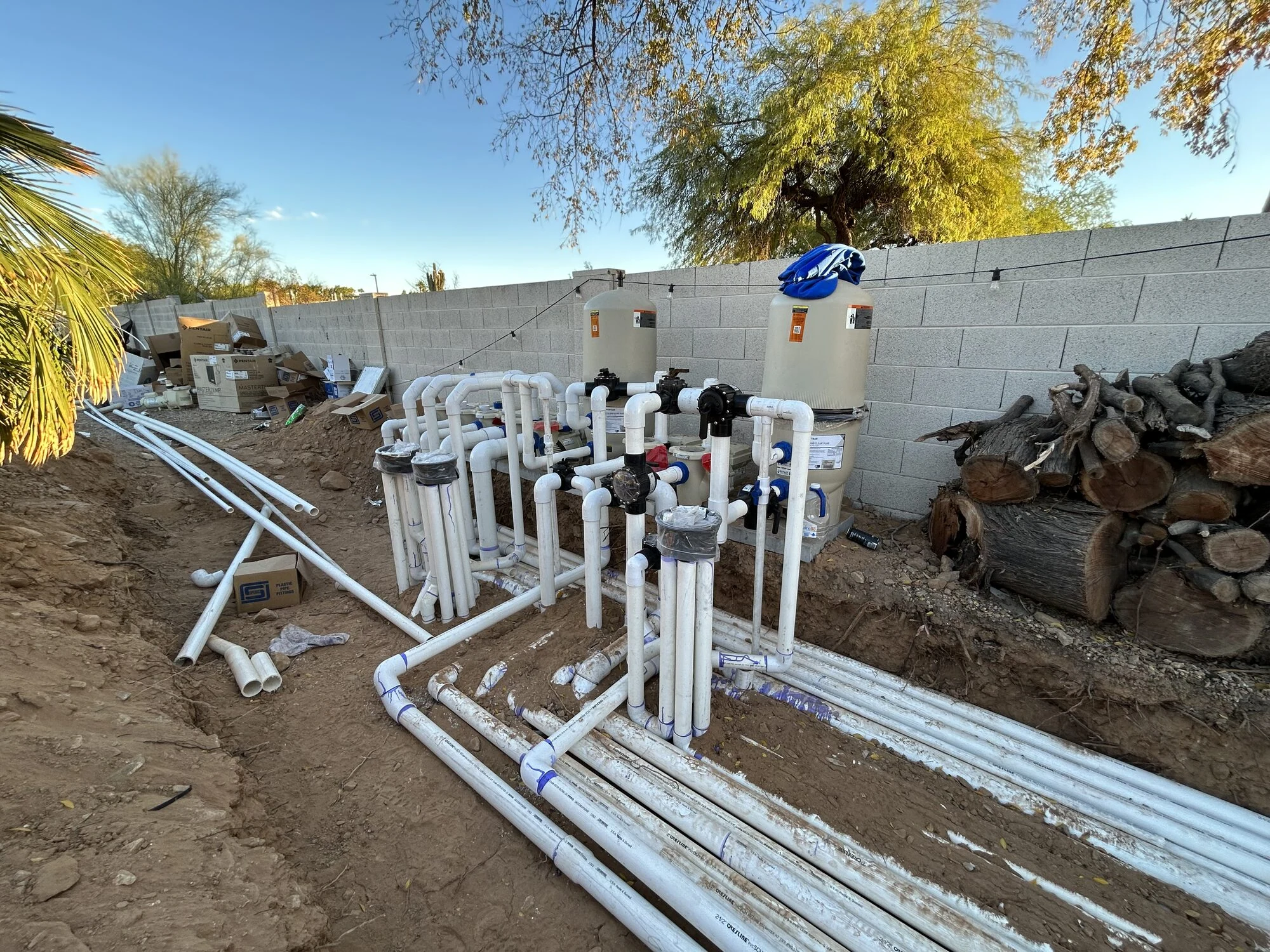
A saltwater pool relies on a process called electrolysis. You pour standard pool salt (sodium chloride) directly into the pool water. The pump pulls this salty water through a specialized titanium salt cell located on your equipment pad. Inside the cell, an electrical charge separates the salt molecules, converting them into hypochlorous acid. This is the exact same sanitizing agent found in store-bought chlorine.
Once the chlorine attacks bacteria and oxidizes organics in the pool, it reverts back into salt. The cycle repeats endlessly.
Because salt does not evaporate, you only need to add more salt when water physically leaves the pool through splash-out, backwashing, or draining. When summer temperatures climb, a saltwater pool Phoenix AZ residents rely on will simply keep generating chlorine without constant trips to the pool supply store.
03 Traditional Chlorine: The Standard for a Reason
A standard chlorine pool Phoenix homeowners manage well usually relies on a mix of liquid chlorine and trichlor tablets.
Tablets are placed in an inline feeder or a floating dispenser. They dissolve slowly, providing a steady baseline of sanitation. Liquid chlorine is poured directly into the water for rapid sanitization, particularly after heavy use or a monsoon dust storm.
The primary challenge with traditional chlorine in Arizona is cyanuric acid. Also known as CYA or stabilizer, this chemical is added to chlorine tablets to prevent the sun from burning off the chlorine too quickly. However, CYA does not evaporate. In the extreme heat of the Valley, pool water evaporates rapidly, leaving the CYA behind.
Over time, the CYA concentration builds up to levels that lock the chlorine, rendering it completely ineffective. When this happens, the water turns cloudy or green, regardless of how much new chlorine you add. The only solution is to physically drain the pool and start over with fresh water. Saltwater systems do not add CYA to the water, making this specific problem much easier to avoid.
04 Upfront Costs and Long-Term Maintenance
The financial comparison between the two systems is rarely a deciding factor, because the costs almost perfectly balance out over a five-year period. You either pay upfront for the equipment, or you pay weekly for the chemicals.
| Expense Category | Saltwater System | Traditional Chlorine |
|---|---|---|
| Initial Installation | $1,500 to $2,500 | $100 to $300 (Inline Feeder) |
| Annual Chemical Costs | $50 to $100 (Salt and acid) | $300 to $600 (Liquid and tabs) |
| Component Replacement | $800 to $1,200 (Cell replacement) | Minimal (O-rings, floats) |
| Lifespan of Core Unit | 3 to 5 years (Salt Cell) | 10+ years (Feeder) |
The math is straightforward. A salt cell requires a significant upfront investment. Over the next three to five years, you will save hundreds of dollars on bucketed chlorine. However, around year four, the titanium plates in the salt cell will lose their reactive coating. The cell will fail, and you will spend your accumulated savings on a replacement cell.
05 How Arizona Hard Water Impacts Salt Cells
Phoenix municipal water is notoriously hard, meaning it carries a massive load of calcium and magnesium. This creates a specific maintenance requirement for saltwater pools.
The electrolysis process inside a salt cell generates heat. When hard water hits this heat, the calcium drops out of the solution and aggressively bonds to the titanium plates inside the cell. Over just a few months, thick white calcium scale will completely coat the plates, preventing the electrical charge from reaching the water.
To keep a salt system functioning in Arizona, the homeowner or pool service technician must physically remove the cell every three months and soak it in a diluted muriatic acid bath. This acid wash dissolves the calcium. If you ignore this maintenance, the cell will stop generating chlorine, the pool will turn green, and the lifespan of the $1,000 cell will be cut in half.
06 The Comfort Factor: Why People Choose Salt
If the costs balance out and the maintenance just shifts from hauling buckets to cleaning a cell, why are salt pools so popular? The answer is comfort.
A saltwater pool operates at roughly 3,000 to 4,000 parts per million of salinity. For context, the human tear duct produces moisture at about 9,000 parts per million, and the ocean sits at 35,000 parts per million.
The water in a salt pool is less salty than your own eyes. This perfectly balanced salinity prevents the water from pulling moisture out of your skin. Swimmers consistently report that salt water feels softer, leaves hair feeling cleaner, and completely eliminates the red, stinging eyes associated with traditional community pools.
Furthermore, salt pools eliminate the strong chemical odor often mistakenly called a "chlorine smell." That odor is actually caused by chloramines, which are the byproducts of chlorine binding with sweat and sunscreen. Because a salt cell generates fresh chlorine continuously, chloramines are destroyed before they can accumulate.
07 The Impact on Pool Decking and Features
Salt is mildly corrosive. In a dry climate where splashed water evaporates in minutes, salt crystals are left behind on whatever surface the water touched.
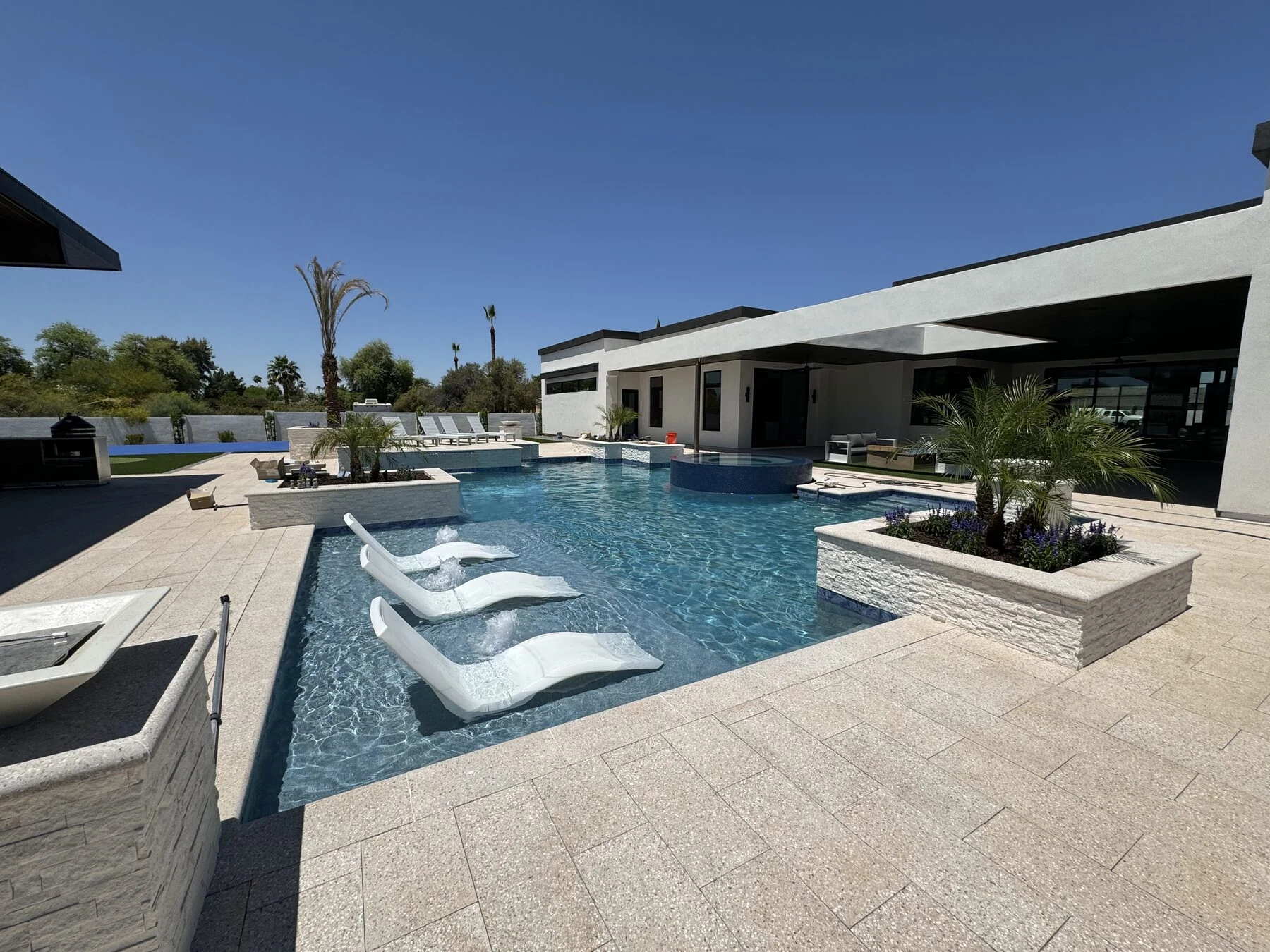
If you have a concrete deck or acrylic lace decking, this is rarely an issue. However, if your custom pool features natural stone coping, travertine decking, or a natural rock waterfall, salt water requires specific management.
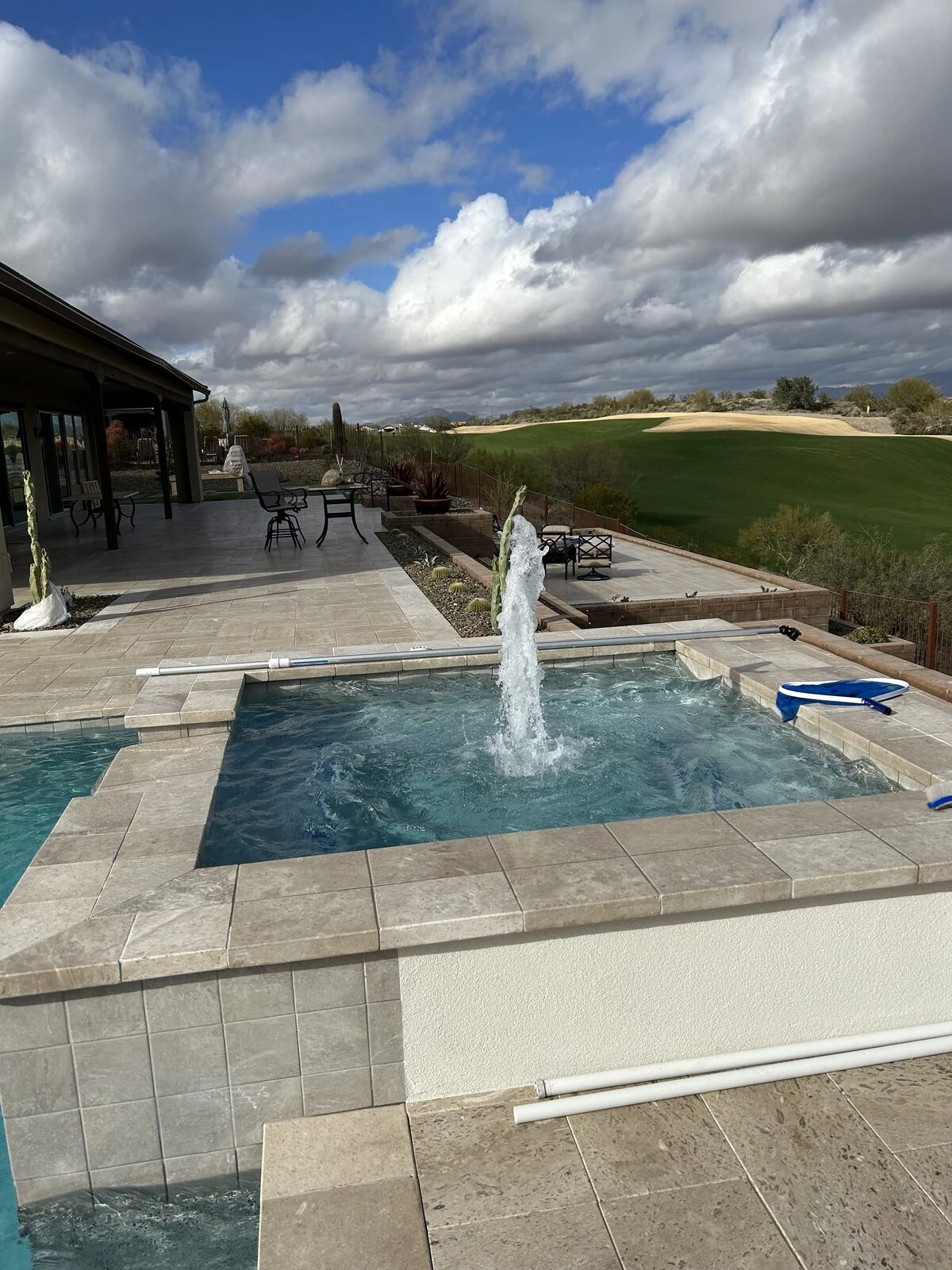
When salt water splashes onto porous travertine, the water evaporates and the salt crystalizes inside the pores of the stone. Over time, these expanding crystals can cause the surface of the stone to flake or spall. To prevent this, natural stone around a saltwater pool must be sealed with a high-quality, penetrating water repellent every two to three years.
Saltwater can also accelerate galvanic corrosion on the metal components of your pool equipment. Any pool built or retrofitted with a salt system must include a sacrificial zinc anode plumbed into the equipment pad. The corrosive properties of the salt will attack the cheap zinc anode instead of your expensive pool heater core or the metal housings of your underwater lights.
08 Frequently Asked Questions
Can I convert my existing traditional pool to a saltwater pool?
Yes. The conversion requires installing a salt cell into the existing plumbing on your equipment pad, wiring the control unit to your breaker panel, adding the correct volume of salt to the water, and installing a sacrificial anode. The water itself does not need to be drained.
Do saltwater pools taste salty?
The salt level is approximately one-tenth the salinity of the ocean. Most people cannot taste the salt at all. Those who can describe it as a very faint, softened taste, similar to water from a home water softener.
Will a salt system run on a single-speed pump?
Salt cells contain flow switches. They require a specific volume of water moving across the plates to safely activate. While they can run on a single-speed pump, the pump would have to run at maximum power all day, resulting in a massive electricity bill. Salt systems are best paired with modern, properly programmed variable-speed pumps that provide just enough continuous flow to keep the cell generating.
Do I still need to shock a saltwater pool?
Yes. A salt cell provides a steady maintenance dose of chlorine. If you host a large pool party, or if a severe summer dust storm blows organic debris into the pool, you will need to manually add liquid chlorine or non-chlorine oxidizing shock to rapidly clear the water.
09 Choose the Right System for Your Arizona Pool
There is no single correct answer for every backyard. A traditional chlorine system offers simplicity and lower upfront costs, while a saltwater system provides unmatched water comfort and eliminates the hassle of buying, storing, and handling chemical jugs.
The decision comes down to the materials used in your deck, the size of your pool, and how you want the water to feel against your skin.
Sun America Pools & Spas designs and builds complete backyard environments tailored to the realities of the Arizona climate. Contact us to schedule a design consultation and determine the exact equipment package that will keep your custom pool pristine year-round.